The Minor Orders of the Oriental Orthodox Church

The Oriental Orthodox Church has two categories of clerics: the Major and Minor Orders. The Major Orders are those ranks by which a man receives the sacrament of Holy Orders / Priesthood. The three levels of the Priesthood are the Bishop, Presbyter, and Deacon. These ranks are conferred by a canonical and valid Orthodox Bishop through the laying on of hands.

Pope Shenouda III:

“We see that non of the elected were authorised to commence their work until the apostles had laid their hands on them. Even the deaconship, no one can carry out its duties without canonical ordination.”

— The Priesthood, Pg. 42.

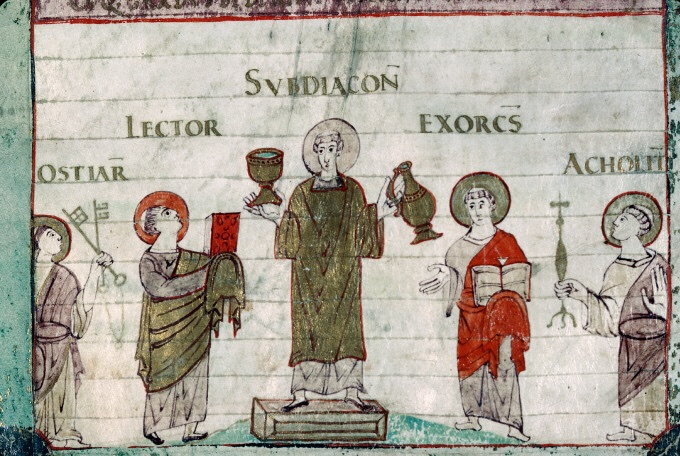
The Minor Orders are non-priestly ranks. In order words, they are not conferred by the laying on of hands as they are not of apostolic origin; but are nevertheless ancient ecclesial offices which developed following the death of the Apostles for the service of the Church. The Minor Orders of the Oriental Orthodox Church are: Door Keeper, Reader, Exorcist, Candle Bearer, and Sub Deacon. Yet, some of these minor ranks only exist in certain jurisdictions.

Continue reading “The Minor Orders of the Oriental Orthodox Church”
‘I am a Christian!’ — St. Euplius the Deacon, Preacher, and Martyr: A Witness of Steadfastness Against Idolatry and Heresy.

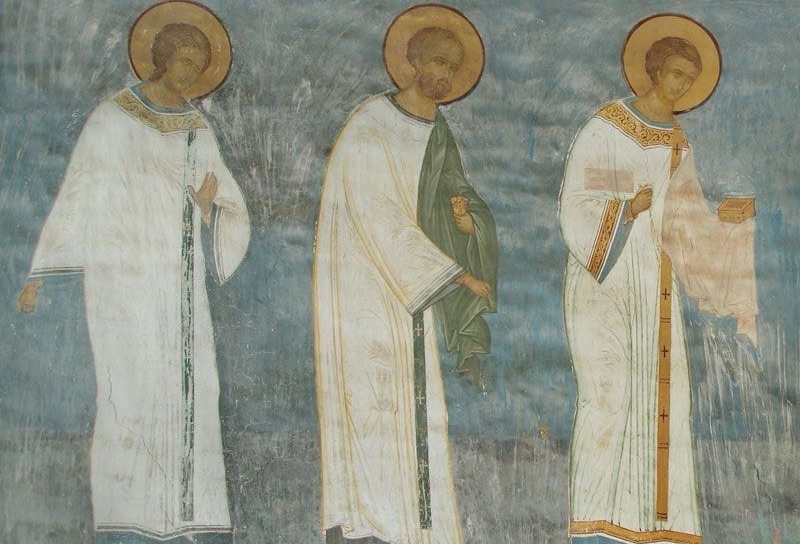
Some may be unaware of the vitalizing story of the early Christian martyr St. Euplius (304 A.D.). Tradition is silent about his early life, age, and background. Yet, we know that he was of a mature age since the Acts of Euplius testify to him as being both a ‘man’ and a Deacon (1) within Catalina, Sicily during the time of Diocletian. He was a bold preacher, evangelist, and firm defender of truth against false religion and idolatry; always keeping the four gospels on his person. This is what cost him his earthly life; but attainment of eternal glory. 

The Oxford Classic ‘The Acts of the Christian Martyrs’ explains that there are two recensions to his story: one Greek (GR) and the other Latin (LR). Both editions complement one another; as they provide details and clues which lack in the other. The examples are many; which will not be covered in its entirety in this article. 

Both versions are silent in respect to his life prior to his martyrdom; but instead immediately describe the epoch in which he openly detested Diocletian’s regime and abominable edict – that by the threat of death all should worship the idols of the state. Historical complications arise given that both versions disagree in respect to when he began challenging the governor Calvisianus outside of his council – chamber (2). Nevertheless, both agree that he willed to suffer and die for Christ. 

Continue reading “‘I am a Christian!’ — St. Euplius the Deacon, Preacher, and Martyr: A Witness of Steadfastness Against Idolatry and Heresy.”

Ecclesial Order, Apostolic Tradition, and Sacerdotal Vestments.

I have recently written an article addressing an important issue within the Orthodox Tewahedo Church regarding rhetoric towards the other sister Churches by certain clergy and laity; and argued that such babble is vain provided that the Oriental Orthodox Church is the Bride of Christ cannot fail in sanctifying her children through her pure doctrines, dogmas, ancient traditions, and sacraments despite the locality and diversity of each particular autocephalous and apostolic church.

Though I could have expanded on several other points; which would take more than one essay to address, and for the sake of sparing my reader’s attention span; one significant matter that I have explained is that the Church is the very Body of Christ (Colossians 1:18).

Jesus is the Head of the Body; and has commissioned that His Limbs, the members of the Church, be governed by Him accordingly within the Church’s proper ecclesial structure. In other words, the members of the Church are to remain within their proper order, rank, and place by which they have been appointed; be it if they are catechumens, laity, readers, sub deacons, deacons, priests, Bishops, etc. 

Continue reading “Ecclesial Order, Apostolic Tradition, and Sacerdotal Vestments.”