Ecclesial Order, Apostolic Tradition, and Sacerdotal Vestments.

I have recently written an article addressing an important issue within the Orthodox Tewahedo Church regarding rhetoric towards the other sister Churches by certain clergy and laity; and argued that such babble is vain provided that the Oriental Orthodox Church is the Bride of Christ cannot fail in sanctifying her children through her pure doctrines, dogmas, ancient traditions, and sacraments despite the locality and diversity of each particular autocephalous and apostolic church.

Though I could have expanded on several other points; which would take more than one essay to address, and for the sake of sparing my reader’s attention span; one significant matter that I have explained is that the Church is the very Body of Christ (Colossians 1:18).

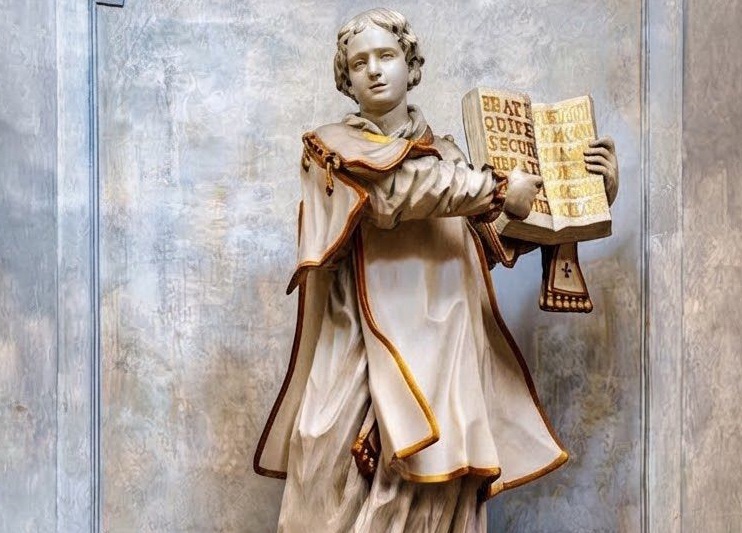
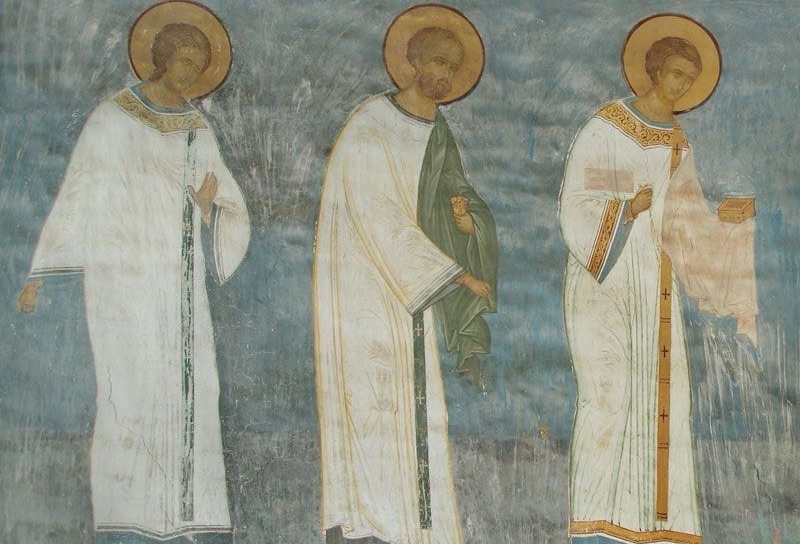
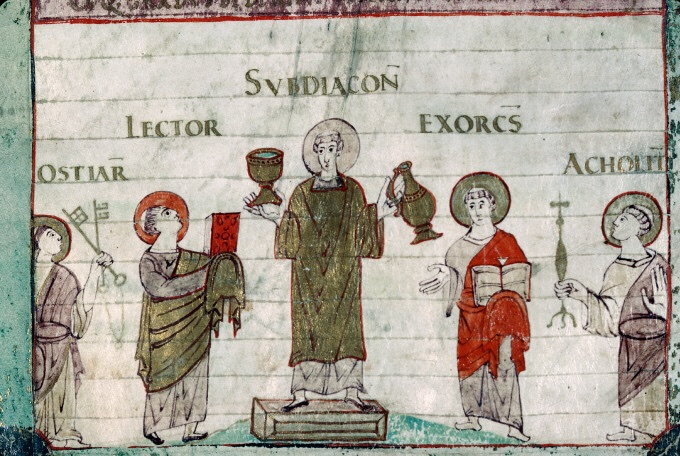
Jesus is the Head of the Body; and has commissioned that His Limbs, the members of the Church, be governed by Him accordingly within the Church’s proper ecclesial structure. In other words, the members of the Church are to remain within their proper order, rank, and place by which they have been appointed; be it if they are catechumens, laity, readers, sub deacons, deacons, priests, Bishops, etc. 

Continue reading “Ecclesial Order, Apostolic Tradition, and Sacerdotal Vestments.”

Unceasing Prayer through the Spirit and its Fruit: A Homily of St. Macarius the Great

That we need a great zeal for prayer, and that the Spirit who dwells in our spirits brings it about, is clearly shown by the words of the Apostle, who exhorts us: “Pray all the time, asking for what you need, praying in the Spirit on every possible occasion”(Eph 6:18).

Whoever of the brothers dedicates himself to this, namely, unceasing prayer, possesses a beautiful treasure, which becomes the greatest possession of one who loves God with a firm and right conscience.” He never willingly strays away into distractions, nor does he have an unwonted debt that needs paying; but rather he fulfillsthe love and desires of his spirit, displaying to all the brothers the good fruits that come from perseverance.

It is necessary, however, that the others in the community also make time for such unceasing prayer and rejoice in persevering in prayer so that they become sharers of such a life. The Lord himself will surely give to those who ask how they must pray, according to what is said: “He gives to him what he has asked for” (Ps 106:15). Therefore, we ought to ask and to know that the better one makes an effort in the work of prayer, the more he must sustain the battle with great care and all virtue.

Continue reading “Unceasing Prayer through the Spirit and its Fruit: A Homily of St. Macarius the Great”

The Diaconate: Servanthood, Character, and Apostolic Order

Illustration of Armenian Deacon and Subdeacon by Joseph Pitton de Tournefort (1656-1708)

Considering that there is a lack of understanding amongst many of the faithful regarding what the office of the Deacon entails, and what his responsibilities are, I’ve discerned to write on this matter for clarification. This is for both my own reflection as a Deacon and for the potential benefit of my readers; though my understanding of this great office is limited and fallible.

The Diaconate is understood by the Church as being the first rank of the Major Orders of the Clergy. The word Deacon (Greek: διάκονος / diakonos) means ‘an attendant, a minister, a servant’. More explicitly does the word ‘Diakonos’ properly mean, per linguistic scholars: “‘to kick up dust,’ as one running an errand.” (1) Thereby, the Deacon is ordained to serve the Church – the Body of Christ.

The tasks of the Diaconate to minister to the people was at first the responsibility of the Apostles. But to alleviate a workload that was interfering with their mission to “give ourselves continually to prayer and to the ministry of the word” (Acts 6:4) as “It is not desirable that we should leave the word of God and serve tables” (Acts 6:2), the Apostles commanded the faithful to “seek out from among you seven men of good reputation, full of the Holy Spirit and wisdom, whom we may appoint over this business” (Acts 6:3) as there was a conflict between the Hellenists and the Hebrews regarding the daily distribution of food (Acts 6:1), given that the faithful of the Church lived in common (Acts 2:44; c.f. Acts 4:32).

Continue reading “The Diaconate: Servanthood, Character, and Apostolic Order”