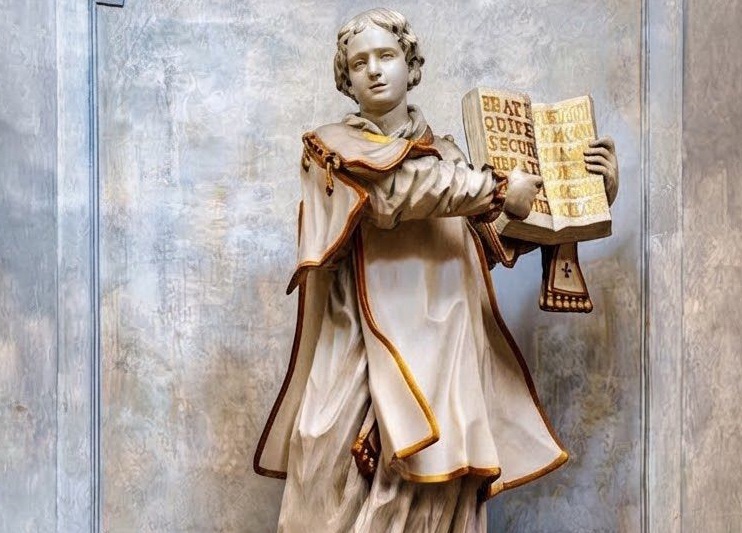
‘I am a Christian!’ — St. Euplius the Deacon, Preacher, and Martyr: A Witness of Steadfastness Against Idolatry and Heresy.

Some may be unaware of the vitalizing story of the early Christian martyr St. Euplius (304 A.D.). Tradition is silent about his early life, age, and background. Yet, we know that he was of a mature age since the Acts of Euplius testify to him as being both a ‘man’ and a Deacon (1) within Catalina, Sicily during the time of Diocletian. He was a bold preacher, evangelist, and firm defender of truth against false religion and idolatry; always keeping the four gospels on his person. This is what cost him his earthly life; but attainment of eternal glory. 

The Oxford Classic ‘The Acts of the Christian Martyrs’ explains that there are two recensions to his story: one Greek (GR) and the other Latin (LR). Both editions complement one another; as they provide details and clues which lack in the other. The examples are many; which will not be covered in its entirety in this article. 

Both versions are silent in respect to his life prior to his martyrdom; but instead immediately describe the epoch in which he openly detested Diocletian’s regime and abominable edict – that by the threat of death all should worship the idols of the state. Historical complications arise given that both versions disagree in respect to when he began challenging the governor Calvisianus outside of his council – chamber (2). Nevertheless, both agree that he willed to suffer and die for Christ. 

Continue reading “‘I am a Christian!’ — St. Euplius the Deacon, Preacher, and Martyr: A Witness of Steadfastness Against Idolatry and Heresy.”
On the Rejection of Divine Order and the Rise of Chaos

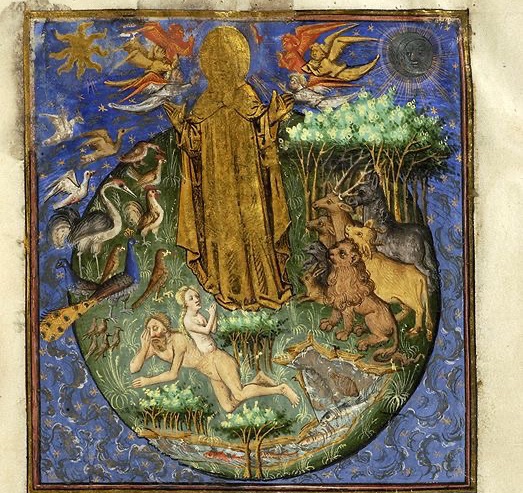
In the very beginning, Christ the Eternal Word created order. He created the law of physics, assigned all of the celestial bodies to their proper places, divided the waters, made land appear, etc. (See Genesis 1).

He likewise created mankind, who was made in His very image and likeness. Thus, man was granted a gift to have a share in expressing the mind of God in a limited degree, which is why Man has rationality and therefore free will. Hence, man was granted a gift in assisting God in keeping order (not that God needed an assistant, but willfully shared limited authority with Man out of His Love, as, again, they were made in His image):

“Then the Lord God took the man He formed and put him in the garden to tend and keep it.”

– Genesis 2:15.

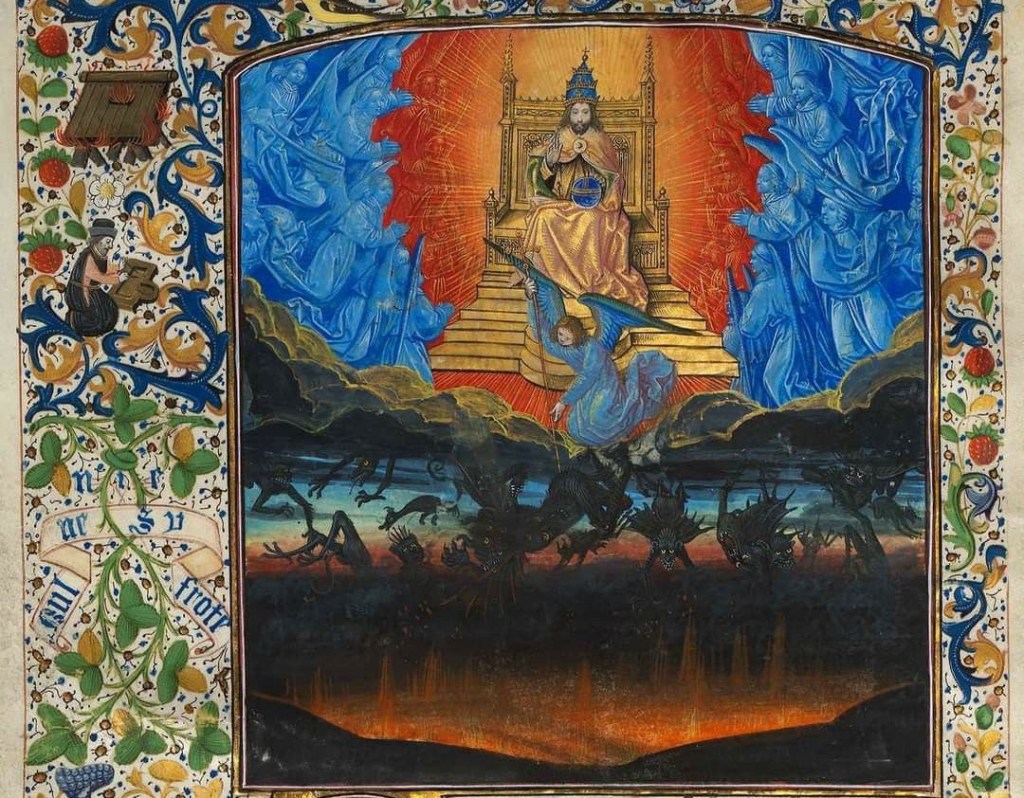
Divine Inspiration tells us that this gift was abused, and that order was rebelled against, as in the case of our first parents who ate of the forbidden fruit (Genesis 3). Thus, God’s original plan and intention for us to never die was ruined by the fault of man; who dethroned God and His will from their hearts and enthroned themselves and their own will.

And what was the offspring of it, save: corruption, sin, and death? And from what sprouted from this poisonous plant but war, destruction, enmities, famines, and the like? If dethroning God from one’s heart individually brings forth spiritual, mental, and even physical mayhem and internal bitter poison; how much more the world?

Continue reading “On the Rejection of Divine Order and the Rise of Chaos”

The Superiority of Biblical Cosmology over Pagan Creation Myths

Throughout history, man has made attempts to explain the origin of all things. This is evident when examining the various cosmological stories of antiquity, such as in the case of the ancient Egyptians and Babylonians who attributed the birth of existence to various deities. These deities had fallen human characteristics, ambitions, and interests.

To cite Holmon’s Quicksource:

“Egyptian and Babylonian (as well as the earlier Sumerian) creation myths were inherently polytheistic, with teeming masses of powerful but flawed gods competing for the spotlight… cohabitations, base motives, and warring between the chief gods led to the incidental creation of other gods as well as the earth, sky, sea, and all living things”

– Whorton, Mark S, and Hill Roberts. Holman Quicksource Guide to Understanding Creation. Nashville, Tennessee, Holman Reference, 2008, 41-42.

These deities of the said groups were not only limited, as they wrestled “with eternal matter to fashion heaven and earth” (Whorton, 37) but were unjust and grudging against the human race. For instance, the Babylonian Enuma Elish tells that the human race was created from the blood of the defeated Kingu, who was seen as being the commander of demons, from the underworld, and an enemy to “superior” deities. Consequently, a personal and loving relationship between humanity and the gods was lacking; as they were created not only as a result of conflict, but to perform difficult labors of the gods such as building, digging, etc.

On the contrary, the Holy Scriptures speak of there being One God that is completely good, just, eternal, omnipotent, sovereign, unlimited, and sacred. As such, He was not in need of any other assistance, nor in need of pre-existent matter to create; as He made all things out of nothing by His Word. The idea of a deity needing pre-existent matter was one shared with, and perhaps adopted, by Plato.

Continue reading “The Superiority of Biblical Cosmology over Pagan Creation Myths”