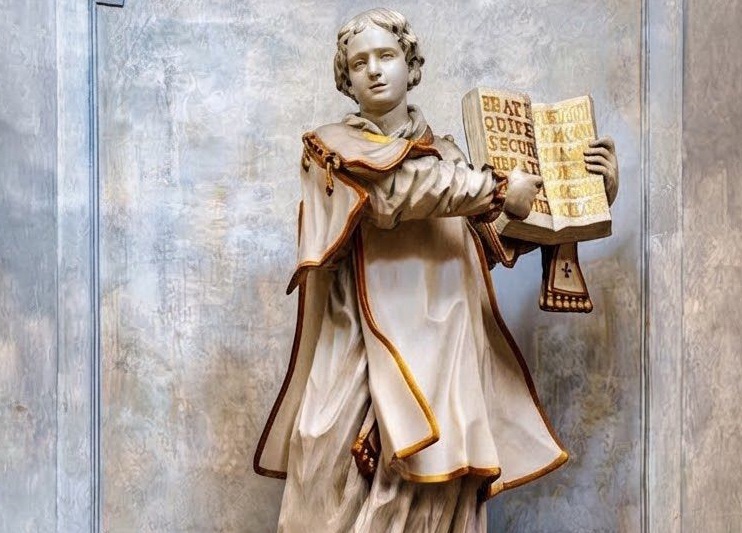
‘I am a Christian!’ — St. Euplius the Deacon, Preacher, and Martyr: A Witness of Steadfastness Against Idolatry and Heresy.

Some may be unaware of the vitalizing story of the early Christian martyr St. Euplius (304 A.D.). Tradition is silent about his early life, age, and background. Yet, we know that he was of a mature age since the Acts of Euplius testify to him as being both a ‘man’ and a Deacon (1) within Catalina, Sicily during the time of Diocletian. He was a bold preacher, evangelist, and firm defender of truth against false religion and idolatry; always keeping the four gospels on his person. This is what cost him his earthly life; but attainment of eternal glory. 

The Oxford Classic ‘The Acts of the Christian Martyrs’ explains that there are two recensions to his story: one Greek (GR) and the other Latin (LR). Both editions complement one another; as they provide details and clues which lack in the other. The examples are many; which will not be covered in its entirety in this article. 

Both versions are silent in respect to his life prior to his martyrdom; but instead immediately describe the epoch in which he openly detested Diocletian’s regime and abominable edict – that by the threat of death all should worship the idols of the state. Historical complications arise given that both versions disagree in respect to when he began challenging the governor Calvisianus outside of his council – chamber (2). Nevertheless, both agree that he willed to suffer and die for Christ. 

Continue reading “‘I am a Christian!’ — St. Euplius the Deacon, Preacher, and Martyr: A Witness of Steadfastness Against Idolatry and Heresy.”
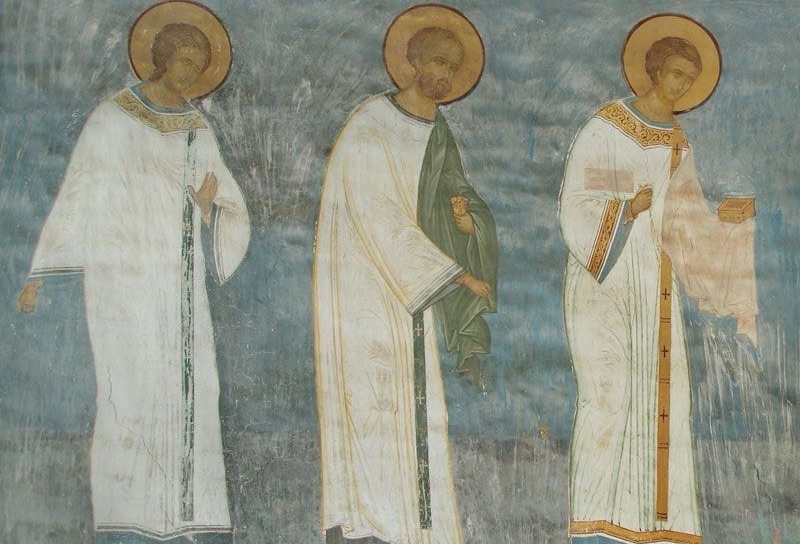
Ecclesial Order, Apostolic Tradition, and Sacerdotal Vestments.

I have recently written an article addressing an important issue within the Orthodox Tewahedo Church regarding rhetoric towards the other sister Churches by certain clergy and laity; and argued that such babble is vain provided that the Oriental Orthodox Church is the Bride of Christ cannot fail in sanctifying her children through her pure doctrines, dogmas, ancient traditions, and sacraments despite the locality and diversity of each particular autocephalous and apostolic church.

Though I could have expanded on several other points; which would take more than one essay to address, and for the sake of sparing my reader’s attention span; one significant matter that I have explained is that the Church is the very Body of Christ (Colossians 1:18).

Jesus is the Head of the Body; and has commissioned that His Limbs, the members of the Church, be governed by Him accordingly within the Church’s proper ecclesial structure. In other words, the members of the Church are to remain within their proper order, rank, and place by which they have been appointed; be it if they are catechumens, laity, readers, sub deacons, deacons, priests, Bishops, etc. 

Continue reading “Ecclesial Order, Apostolic Tradition, and Sacerdotal Vestments.”

The Diaconate: Servanthood, Character, and Apostolic Order

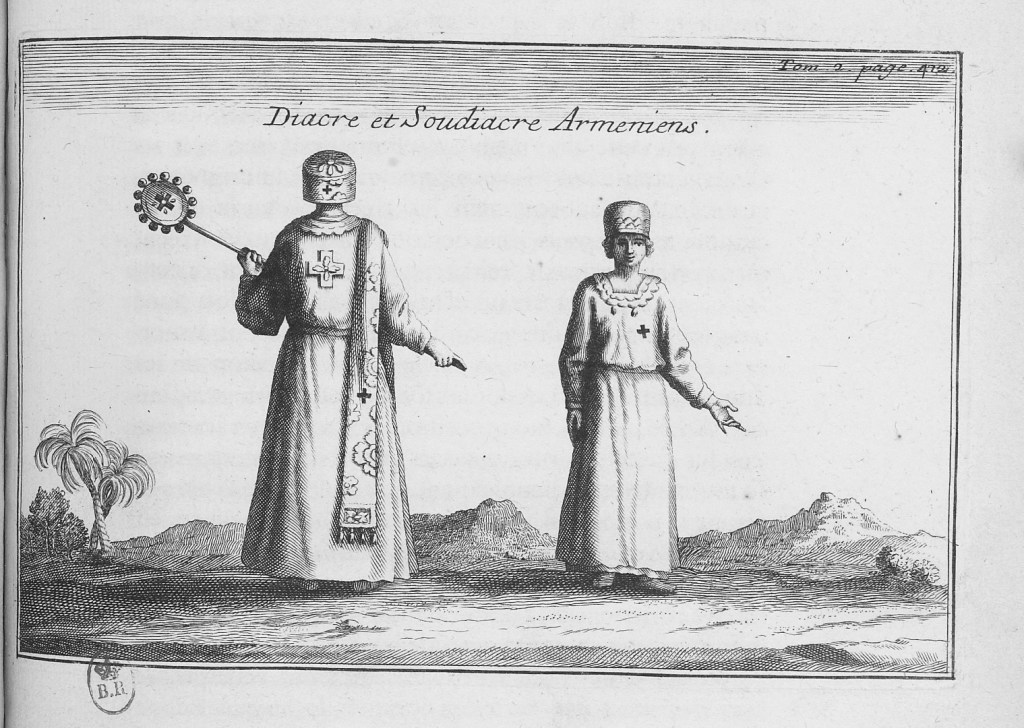
Illustration of Armenian Deacon and Subdeacon by Joseph Pitton de Tournefort (1656-1708)

Considering that there is a lack of understanding amongst many of the faithful regarding what the office of the Deacon entails, and what his responsibilities are, I’ve discerned to write on this matter for clarification. This is for both my own reflection as a Deacon and for the potential benefit of my readers; though my understanding of this great office is limited and fallible.

The Diaconate is understood by the Church as being the first rank of the Major Orders of the Clergy. The word Deacon (Greek: διάκονος / diakonos) means ‘an attendant, a minister, a servant’. More explicitly does the word ‘Diakonos’ properly mean, per linguistic scholars: “‘to kick up dust,’ as one running an errand.” (1) Thereby, the Deacon is ordained to serve the Church – the Body of Christ.

The tasks of the Diaconate to minister to the people was at first the responsibility of the Apostles. But to alleviate a workload that was interfering with their mission to “give ourselves continually to prayer and to the ministry of the word” (Acts 6:4) as “It is not desirable that we should leave the word of God and serve tables” (Acts 6:2), the Apostles commanded the faithful to “seek out from among you seven men of good reputation, full of the Holy Spirit and wisdom, whom we may appoint over this business” (Acts 6:3) as there was a conflict between the Hellenists and the Hebrews regarding the daily distribution of food (Acts 6:1), given that the faithful of the Church lived in common (Acts 2:44; c.f. Acts 4:32).

Continue reading “The Diaconate: Servanthood, Character, and Apostolic Order”