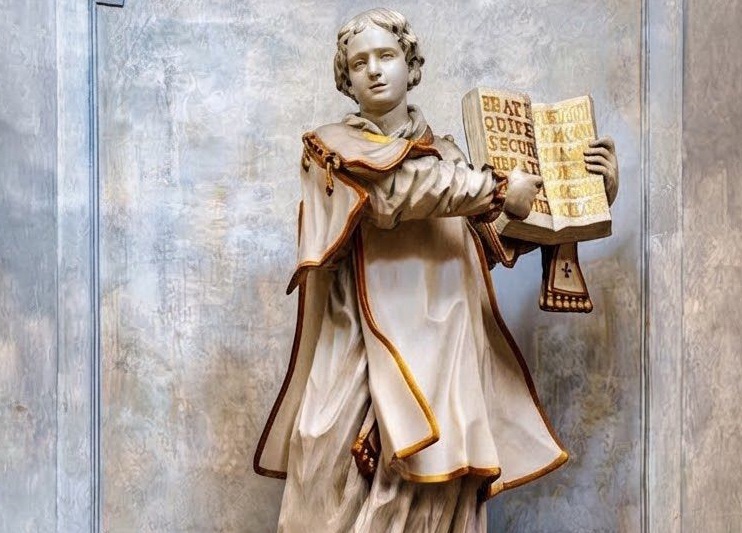
Some may be unaware of the vitalizing story of the early Christian martyr St. Euplius (304 A.D.). Tradition is silent about his early life, age, and background. Yet, we know that he was of a mature age since the Acts of Euplius testify to him as being both a ‘man’ and a Deacon (1) within Catalina, Sicily during the time of Diocletian. He was a bold preacher, evangelist, and firm defender of truth against false religion and idolatry; always keeping the four gospels on his person. This is what cost him his earthly life; but attainment of eternal glory.
The Oxford Classic ‘The Acts of the Christian Martyrs’ explains that there are two recensions to his story: one Greek (GR) and the other Latin (LR). Both editions complement one another; as they provide details and clues which lack in the other. The examples are many; which will not be covered in its entirety in this article.
Both versions are silent in respect to his life prior to his martyrdom; but instead immediately describe the epoch in which he openly detested Diocletian’s regime and abominable edict – that by the threat of death all should worship the idols of the state. Historical complications arise given that both versions disagree in respect to when he began challenging the governor Calvisianus outside of his council – chamber (2). Nevertheless, both agree that he willed to suffer and die for Christ.
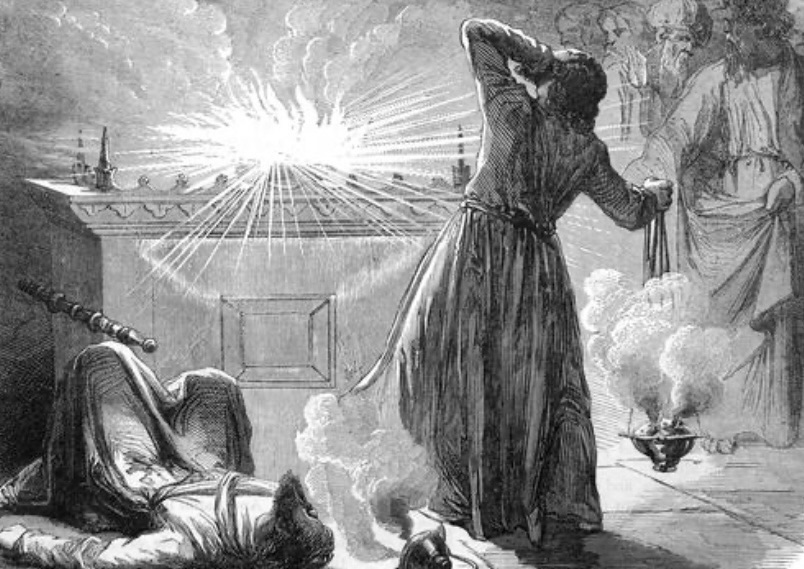
The Punishment of Nadab and Abihu (Leviticus 10:1).
I recently had a discussion with my brother Deacons about reverence for the sacred. More precisely, the Church; especially the Holy of Holies (Bete Mekdes). Being that we are ordained servants of the Altar responsible for guarding its reverence, we agreed that immense care should implemented. Especially given that this is the most sacred part of the Church by which our Lord truly becomes present in the Holy Eucharist.
We then discussed what we have observed in many churches, even beyond the Ethiopian and Eritrean Orthodox Tewahedo tradition, within our Oriental Orthodox communion; that some servants of the altar, be they clerics or lay acolytes, do not revere the sacred, but rather tragically treat it casually. This is either due to poor formation, lack of understanding, or perhaps even negligence; though I am in no position to judge.
In all fairness, there is also a crisis of premature ordinations, which includes young boys, who are not catechized or properly informed on the responsibilities of their office. In many instances, the service is either forced by parents and the church community, with the expectations being that if their son is ordained to some clerical office in the Church; they will not leave it. There’s also expectations that this will also “keep them busy” since it gives them tasks to do during the long liturgy hours, but this is a very heterodox approach to clerical offices; especially to those of the major orders.
This mindset is also a departure from Apostolic Tradition and Patristic Discipline. It is also spiritually dangerous, especially when discretion is not exercised prior to formal appointments and ordinations: be they acolytes, readers, sub deacons, or deacons. But this is not the discussion of this post, nor am I frowning upon liturgical participation from young males as long as they’re reverent (for even I started out as a simple altar boy prior to my conversion to Oriental Orthodox in Traditional Roman Catholic and Eastern Catholic circles).
As you may be aware, I am currently enrolled in a Masters of Theology Program for the Oriental Orthodox Church. Strangely enough, just after this discussion with my brother deacons, I was given an assignment the following week regarding the historic preparatory stages that clerics were bound to follow prior to not only serving the Divine Liturgy, but entering the altar itself. To many, what was enforced would be considered to be either a disconnect from modern conformity, a culture shock, or perhaps even outdated.
Nevertheless, I believe that it is worth to revisit what the fathers taught on this matter: as their instructions were not executed arbitrarily, but with discernment and biblical reference. At any rate , below is a modified version of my essay for school addressing the basic principals of reverence, which will take more than one post to cover God willing. I pray that it is beneficial to those that serve the altar; and that it ignites a burning love and zeal within them for Christ in the Holy Eucharist and the sanctuary. I must also add that this post is not intended to sow fear, but rather, holy reverence.
In Orthodox Christian theology, there is a form of biblical exegesis that is used to pinpoint prophetic symbols, events, and statements which foreshadow the Word Incarnate known as Old Testament typology. Though there are multiple examples that we could examine, we will only be discussing one within this essay, namely: Noah’s Ark. The prophet Moses tells us that during the antediluvian period, God was displeased with mankind due to their accumulation of wicked deeds, practices, and thoughts. In the words of our Blessed Lord:
“I will blot out man whom I created from the face of the earth, from man to cattle, and from the creeping things to the birds of heaven, for I am grieved I made them” (Genesis 6:7).
A source of God’s outrage was that man — who was granted the gift of immortality — was tragically returning to corruption, sin, and death as a result of the fall. Therefore, man was in fact subjecting themselves to these perils and as a result was consequently perishing. St. Athanasius gave us an image of sin running rampant upon the earth when he said:
“[Man] having to begin with been inventors of wickedness and called down upon themselves death and corruption; while later on, having turned aside to wrong and exceeding all lawlessness, and stopping at no one evil but devising all manner of new evils in succession, they have become insatiable in sinning. For there were adulteries everywhere and thefts, and the whole earth was full of murders and plunderings. And as to corruption and wrong, no heed was paid to law, but all crimes were being practised everywhere, both individually and jointly. Cities were at war with cities, and nations were rising up against nations; and the whole earth was rent with civil commotions and battles; each man vying with his fellows in lawless deeds. Nor were even crimes against nature far from them…”