The Oriental Orthodox Church has two categories of clerics: the Major and Minor Orders. The Major Orders are those ranks by which a man receives the sacrament of Holy Orders / Priesthood. The three levels of the Priesthood are the Bishop, Presbyter, and Deacon. These ranks are conferred by a canonical and valid Orthodox Bishop through the laying on of hands.
Pope Shenouda III:
“We see that non of the elected were authorised to commence their work until the apostles had laid their hands on them. Even the deaconship, no one can carry out its duties without canonical ordination.”
— The Priesthood, Pg. 42.
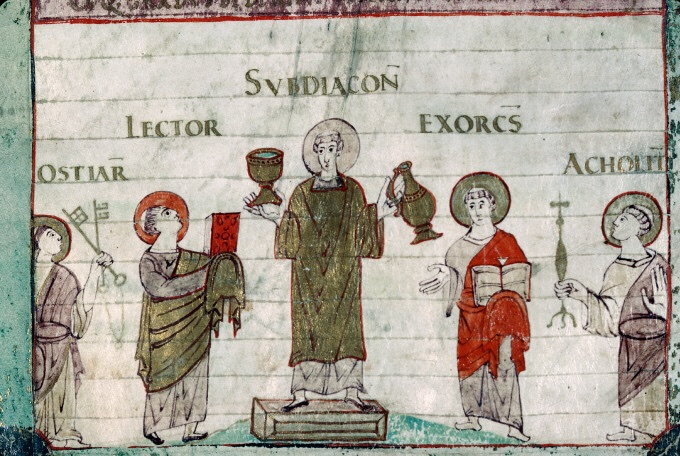
The Minor Orders are non-priestly ranks. In order words, they are not conferred by the laying on of hands as they are not of apostolic origin; but are nevertheless ancient ecclesial offices which developed following the death of the Apostles for the service of the Church. The Minor Orders of the Oriental Orthodox Church are: Door Keeper, Reader, Exorcist, Candle Bearer, and Sub Deacon. Yet, some of these minor ranks only exist in certain jurisdictions.
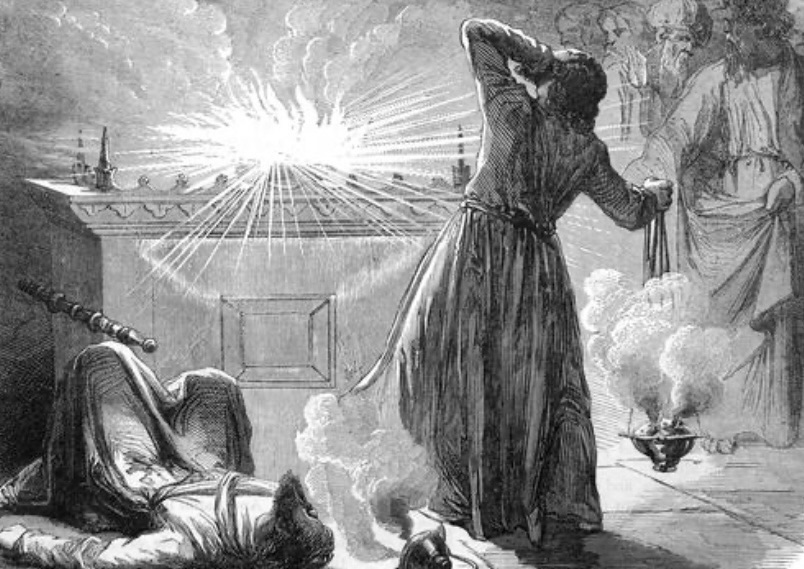
The Punishment of Nadab and Abihu (Leviticus 10:1).
I recently had a discussion with my brother Deacons about reverence for the sacred. More precisely, the Church; especially the Holy of Holies (Bete Mekdes). Being that we are ordained servants of the Altar responsible for guarding its reverence, we agreed that immense care should implemented. Especially given that this is the most sacred part of the Church by which our Lord truly becomes present in the Holy Eucharist.
We then discussed what we have observed in many churches, even beyond the Ethiopian and Eritrean Orthodox Tewahedo tradition, within our Oriental Orthodox communion; that some servants of the altar, be they clerics or lay acolytes, do not revere the sacred, but rather tragically treat it casually. This is either due to poor formation, lack of understanding, or perhaps even negligence; though I am in no position to judge.
In all fairness, there is also a crisis of premature ordinations, which includes young boys, who are not catechized or properly informed on the responsibilities of their office. In many instances, the service is either forced by parents and the church community, with the expectations being that if their son is ordained to some clerical office in the Church; they will not leave it. There’s also expectations that this will also “keep them busy” since it gives them tasks to do during the long liturgy hours, but this is a very heterodox approach to clerical offices; especially to those of the major orders.
This mindset is also a departure from Apostolic Tradition and Patristic Discipline. It is also spiritually dangerous, especially when discretion is not exercised prior to formal appointments and ordinations: be they acolytes, readers, sub deacons, or deacons. But this is not the discussion of this post, nor am I frowning upon liturgical participation from young males as long as they’re reverent (for even I started out as a simple altar boy prior to my conversion to Oriental Orthodox in Traditional Roman Catholic and Eastern Catholic circles).
As you may be aware, I am currently enrolled in a Masters of Theology Program for the Oriental Orthodox Church. Strangely enough, just after this discussion with my brother deacons, I was given an assignment the following week regarding the historic preparatory stages that clerics were bound to follow prior to not only serving the Divine Liturgy, but entering the altar itself. To many, what was enforced would be considered to be either a disconnect from modern conformity, a culture shock, or perhaps even outdated.
Nevertheless, I believe that it is worth to revisit what the fathers taught on this matter: as their instructions were not executed arbitrarily, but with discernment and biblical reference. At any rate , below is a modified version of my essay for school addressing the basic principals of reverence, which will take more than one post to cover God willing. I pray that it is beneficial to those that serve the altar; and that it ignites a burning love and zeal within them for Christ in the Holy Eucharist and the sanctuary. I must also add that this post is not intended to sow fear, but rather, holy reverence.