The Indefectibility of the One Church: A Response to Schismatic Rhetoric

The Church’s Indefectibility

If we regard the account of Apostolic and Patristic witness to be credible, and therefore true; then we shall acknowledge that both regarded the Church as Christ’s Mystical Body. St. Paul: “… Him is who is the head – Christ – from Whom the whole Body, joined and knit together…” (Ephesians 4:15-16, OSB); “And He is the head of the Body, the Church…” (Colossians 1:18). 

The Church is also the spouse of Christ, and as His spouse, She is one flesh with Him (cf. Genesis 2:24). So, just as Christ is pure, spotless, and without blemish (Heb 4:15; 9:14) His Church, being His Body, is likewise thus since He is her head. 

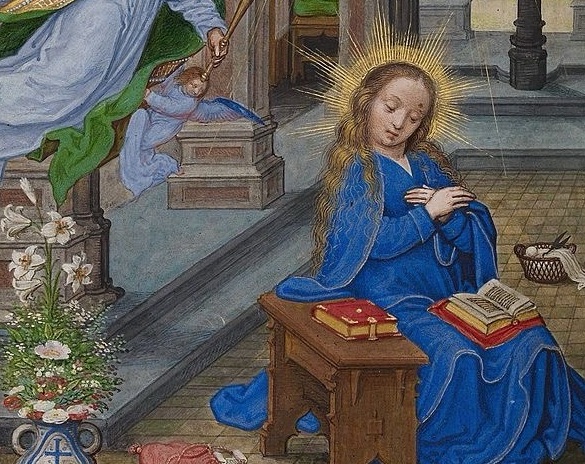
Describing her chastity, St. Augustine likened her to the Theotokos and Ever- Virgin Mary with the following words: 

“Surpassing all the sons of men in beauty, He (Jesus), the Son of Holy Mary and Spouse of Holy Church, has made it a mother for us and kept it a virgin for Himself.”  1

In sequence, he continues: 

The church is like Mary; her perfection was never defiled, and her fertility was never corrupted. What Mary was made worthy of in the flesh, the church received it spiritually. The only exception to that is that Mary gave birth to one son (Jesus Christ) but the church gave birth to many children for them to be gathered together in the one body in the one (Christ). 2
Continue reading “The Indefectibility of the One Church: A Response to Schismatic Rhetoric”

The Way of the Cross: Historical Persecution and Spiritual Endurance in the Coptic Church

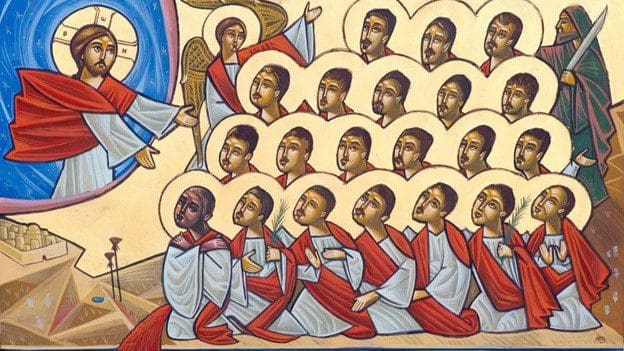
The icon of the 2015 kidnapping and execution of the 21 Coptic Martyrs in Libya is one of the most recognizable modern icons in the Coptic Orthodox Church. It depicts the twenty-one martyrs dressed in orange garments, standing together in faith moments before their execution on a beach in Libya by ISIS militants in February 2015. In many icons, Christ is shown above them welcoming them into heaven, emphasizing their steadfast faith and martyrdom. The icon symbolizes courage, unity, forgiveness, and unwavering commitment to Christ even in the face of death. The martyrs were canonized by the Coptic Church shortly after their deaths and are commemorated annually on February 15.

The history of the Coptic Orthodox Church of Alexandria is an enduring journey along the path of the Cross. Founded by Saint Mark the Evangelist in the middle of the first century, this ancient Apostolic see has preserved the spotless deposit of faith through eras of profound isolation, social marginalization, and overt hostility. To look upon the Coptic experience merely through the lens of modern secular politics is to miss the deeper spiritual reality of its survival. For the faithful, the ongoing hardships faced by the Christian minority in Egypt are not just social and political struggles, but a continuous participation in the suffering and endurance of Christ.1

According to the United Nations international framework established in 1948, systematic discrimination and state-sanctioned oppression toward a distinct community are defined by specific criteria of systemic harm. Article II of the 1948 Genocide Convention explicitly outlines these violations as, “Killing members of the group…Causing serious bodily or mental harm…physical destruction in whole or in part…imposing measures intended to prevent births within the group…forcibly transferring children of the group.”2 While a common misconception assumes that systematic destruction must involve the immediate and spontaneous erasure of a massive population, international standards recognize that systemic persecution can be slow, hidden, and characterized by profound mental anguish. This criterion allows us to understand the true depth of the ongoing structural adversity faced by Coptic Christians throughout Egypt’s modern history.

Continue reading “The Way of the Cross: Historical Persecution and Spiritual Endurance in the Coptic Church”

Unceasing Prayer through the Spirit and its Fruit: A Homily of St. Macarius the Great

That we need a great zeal for prayer, and that the Spirit who dwells in our spirits brings it about, is clearly shown by the words of the Apostle, who exhorts us: “Pray all the time, asking for what you need, praying in the Spirit on every possible occasion”(Eph 6:18).

Whoever of the brothers dedicates himself to this, namely, unceasing prayer, possesses a beautiful treasure, which becomes the greatest possession of one who loves God with a firm and right conscience.” He never willingly strays away into distractions, nor does he have an unwonted debt that needs paying; but rather he fulfillsthe love and desires of his spirit, displaying to all the brothers the good fruits that come from perseverance.

It is necessary, however, that the others in the community also make time for such unceasing prayer and rejoice in persevering in prayer so that they become sharers of such a life. The Lord himself will surely give to those who ask how they must pray, according to what is said: “He gives to him what he has asked for” (Ps 106:15). Therefore, we ought to ask and to know that the better one makes an effort in the work of prayer, the more he must sustain the battle with great care and all virtue.

Continue reading “Unceasing Prayer through the Spirit and its Fruit: A Homily of St. Macarius the Great”