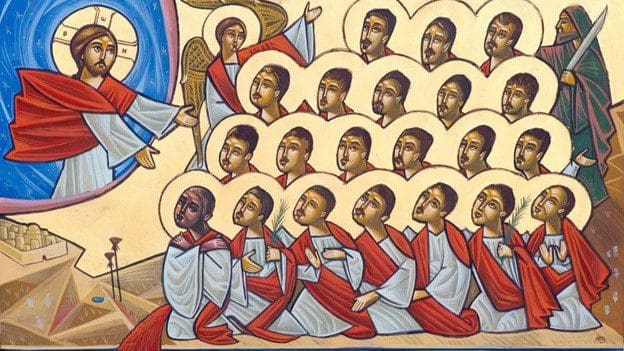
The history of the Coptic Orthodox Church of Alexandria is an enduring journey along the path of the Cross. Founded by Saint Mark the Evangelist in the middle of the first century, this ancient Apostolic see has preserved the spotless deposit of faith through eras of profound isolation, social marginalization, and overt hostility. To look upon the Coptic experience merely through the lens of modern secular politics is to miss the deeper spiritual reality of its survival. For the faithful, the ongoing hardships faced by the Christian minority in Egypt are not just social and political struggles, but a continuous participation in the suffering and endurance of Christ.1
According to the United Nations international framework established in 1948, systematic discrimination and state-sanctioned oppression toward a distinct community are defined by specific criteria of systemic harm. Article II of the 1948 Genocide Convention explicitly outlines these violations as, “Killing members of the group…Causing serious bodily or mental harm…physical destruction in whole or in part…imposing measures intended to prevent births within the group…forcibly transferring children of the group.”2 While a common misconception assumes that systematic destruction must involve the immediate and spontaneous erasure of a massive population, international standards recognize that systemic persecution can be slow, hidden, and characterized by profound mental anguish. This criterion allows us to understand the true depth of the ongoing structural adversity faced by Coptic Christians throughout Egypt’s modern history.
A Heritage of Continuous Faith and Trial
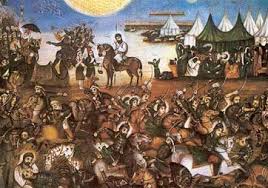
Religious prejudice is an old trial in the land of Egypt, stretching back across many centuries. According to the historical analysis in the book Coptic Christians and Muslims in Egypt by Fikry Andrawes, “The Copts were also subjected to periods of persecution by rulers from the Umayyad, Abbasid, and Fatimid dynasties, and under the Mamluks…religious difference in Egypt was frequently exploited by rulers, both internal and external, for political gain.”3
While Egypt was heavily Christianized starting from the apostolic era, the nation fell under Islamic rule after 647 AD. Under this governance, Christians and Jews were required to pay heavy amounts of taxes to remain in their ancestral homeland and practice Christianity. Those who were unfortunate and unable to afford these financial burdens were left with few choices, often facing death or conversion to Islam. In the modern era, this historical prejudice has evolved into persistent systemic issues that divide the country and limit the civil rights of Coptic Christians across almost every dimension of public life.
This limitation of rights begins within everyday cultural institutions before extending to the highest levels of administrative governance. According to an official report published by Coptic Solidarity, a glaring exclusion exists within professional football, the most popular sport in the country. The report states, “Not a single Copt can be found in either the main team or the reserve, and it follows that there are no Coptic sports commentators.”4 In specific documented cases, Coptic athletes were even required to convert to Islam to be permitted to play on a professional level.
These structural barriers translate directly into the realms of education and national politics. In 2002, the news agency Al Hayat reported a striking disparity in national representation, noting that, “out of 444 candidates elected to parliament, only three [Christians] have succeeded [in being elected], one of whom was fired because he held another citizenship in addition to his Egyptian citizenship.”5 Furthermore, the publication Watani documents that, “No Christian can hold the position of governor, university president, or faculty dean. [Only] a small number of Christians hold top police posts.”6
Institutional Barriers in Education and Daily Life
Religious discrimination in Egypt reaches deeply into the educational system, where young students are separated and identified by their faith from an early age. In many public schools, a student’s religion is explicitly written on their mandatory student identity cards. Fathia El Dakhakhny, a prominent columnist at Al Masry Al Youm, shared a testimony regarding this systemic bias, admitting that her younger brother was actively being taught in school that, “Christians were unbelievers who will go to Hell…that their food is disgusting and that it is not fit for Muslims to eat.”7
This institutional exclusion is mirrored at the highest levels of academia. Al Azhar University, the premier and most prestigious educational institution in Egypt, did not allow any Christian students onto its campus until very recently in 2017. According to reports from Al Fanar Media, Al Azhar has long faced criticism for, “an outdated curriculum based on archaic ideas that encourage bigotry towards non Muslims and support a very conservative interpretation of religion.”8 Such educational policies intentionally cultivate hostility in the next generation, ensuring that social division is perpetuated across decades.
Beyond the classroom, Coptic Christians face legal hurdles designed to restrict their communal worship and economic stability. Timothy Kaldas, a professor at Nile University, explains that a specific, “church building law passed [which] maintains a set of rules and regulations for any sort of renovation and construction of a Christian house of worship, rules that mosques do not have to comply with.”9 This creates an unequal legal and financial burden on Christian communities seeking to maintain their historic parishes.
This systemic pressure has also resulted in documented housing inequality. Research titled Characterizing the Copts in Egypt: Demographic, Socioeconomic and Health Indicators reveals that Coptics are, “more likely to reside in urban areas and tend to rent their homes, while Muslims more often reside in rural areas and own their dwellings.”10 This disparity in property ownership reflects a structural inequity that impacts the long-term economic stability and generational wealth of Coptic families.
The Modern Crucible of Violence
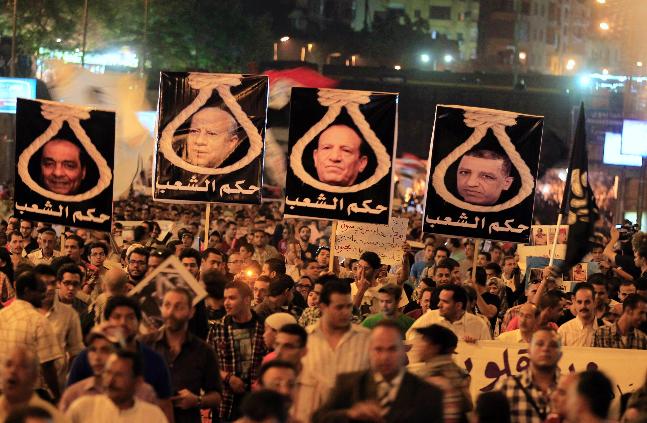
When these underlying social prejudices erupt into open hostility, the results are devastating. During the presidency of Mohamed Morsi in 2012 and the political rise of the Muslim Brotherhood, an Islamist organization, religiously motivated violence escalated rapidly. According to data published by USA Today, “Forty churches have been looted and torched, while 23 others have been attacked and heavily damaged.”11
This era of instability also targeted the safety of vulnerable individuals. Documentation compiled by international lawyers revealed that, “over 550 cases of abduction, enslavement, rape, and trafficking of Coptic Christian girls have been documented from 2007 to 2012.”12
As these structural injustices and violent acts became unbearable, Coptic communities gathered to voice their grief through peaceful public resistance. This culminated in the historic Maspero demonstrations in October of 2011. However, the intervention of state security forces quickly turned this peaceful gathering into a tragedy. Witness and human rights activist Hossam Bahghat explained to CBS News that, “As soon as they arrived, they came under gunfire and then what we saw on TV were army vehicles chasing protesters and running them over.”13 This security intervention resulted in over 300 Coptic citizens injured and approximately 30 killed.
This use of state force was not an isolated phenomenon. The Egyptian Organization for Human Rights documented a long history of institutional violence, reporting 567 cases of torture and 167 torture-based deaths in Egypt between 1993 and 2007.14 This systemic hostility has repeatedly manifested in horrific communal tragedies, including the Alexandria church bombing, the Imbaba church bombing, and the Palm Sunday church bombings in Tanta and Alexandria.
Broken Promises and the Patristic Call to Endurance
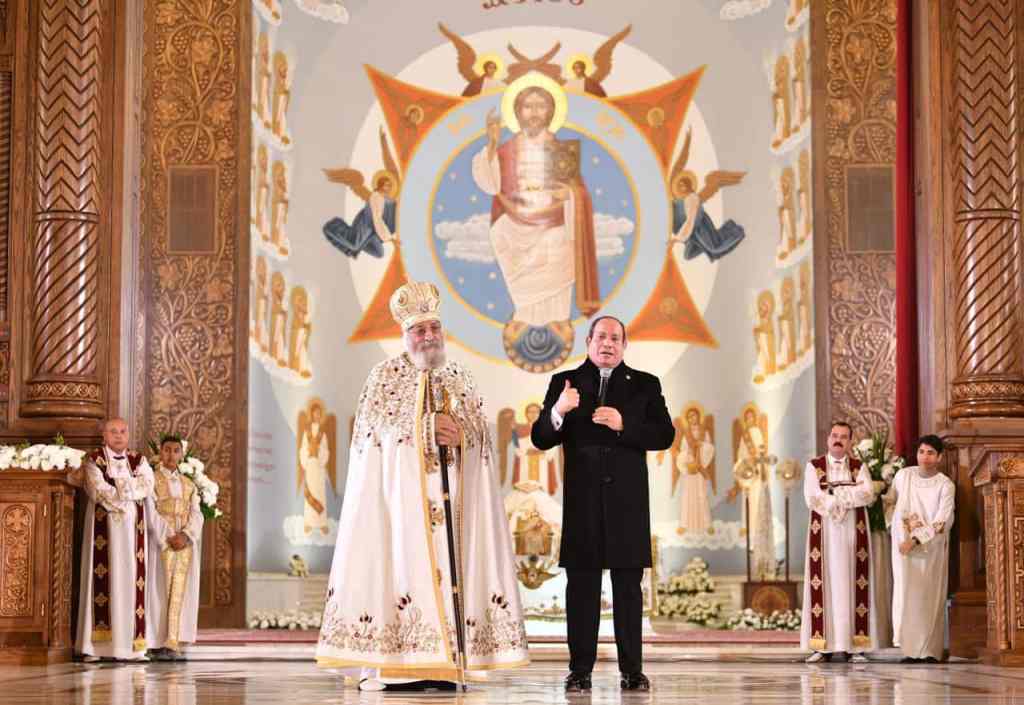
The political landscape has frequently utilized false promises to obscure everyday prejudices from public view. Upon taking power, President Morsi and the Muslim Brotherhood publicly promised strong ties with the Church and the inclusion of Christian leaders in governance. Although Morsi promised to appoint a Christian and a woman as vice presidents, he instead chose Mahmoud Mekki, a fellow member of the Muslim Brotherhood. Under intense public pressure, Morsi eventually appointed only two Christian advisors, a severely deficient number compared to the 46 Muslim advisors and governors appointed to his administration.
Simultaneously, the Muslim Brotherhood worked to deepen social rifts by covertly spreading false statements on social media platforms like Facebook, accusing the Coptic community of declaring war against Muslims and claiming that the Coptic Pope was actively attacking Islamic Sharia law. By propagating these misleading narratives, the administration succeeded in shifting public attention, portraying Coptic Christians as the aggressors rather than the victims.
Even after the political shifts of 2013 and the election of President Al Sisi in 2014, many promises of full equality remain unfulfilled. While Al Sisi expressed an initial commitment to challenge extremist laws, he later extended his presidential term limit until 2030, echoing the authoritarian governance patterns of predecessors like Hosni Mubarak, who ruled for over thirty years. Alex Shalaby, the president of Coptic Solidarity, notes that, “We still see reconciliation tactics pressuring the closing of Christian churches and there are still very few Coptic government appointees.”15 Furthermore, human rights organizations like Amnesty International have raised serious alarms, accusing the current administration of, “employing the same methods of torture and other ill treatment used during the darkest hours of the Mubarak era.”16
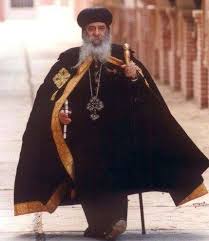
Faced with these unending worldly trials, how are the Coptic faithful called to respond? The answer is preserved in the timeless wisdom of the holy fathers, who teach that the path of the Christian is fundamentally defined by the mystery of the Cross. The late Pope Shenouda III provided immense comfort to a suffering flock by turning their gaze toward Christ:
“In your sufferings trust that Christ is the Friend of every one who suffers. He is his Partner and his Companion and He will not leave him along the path of sufferings.”17
Pope Shenouda III, 117th Pope of Alexandria
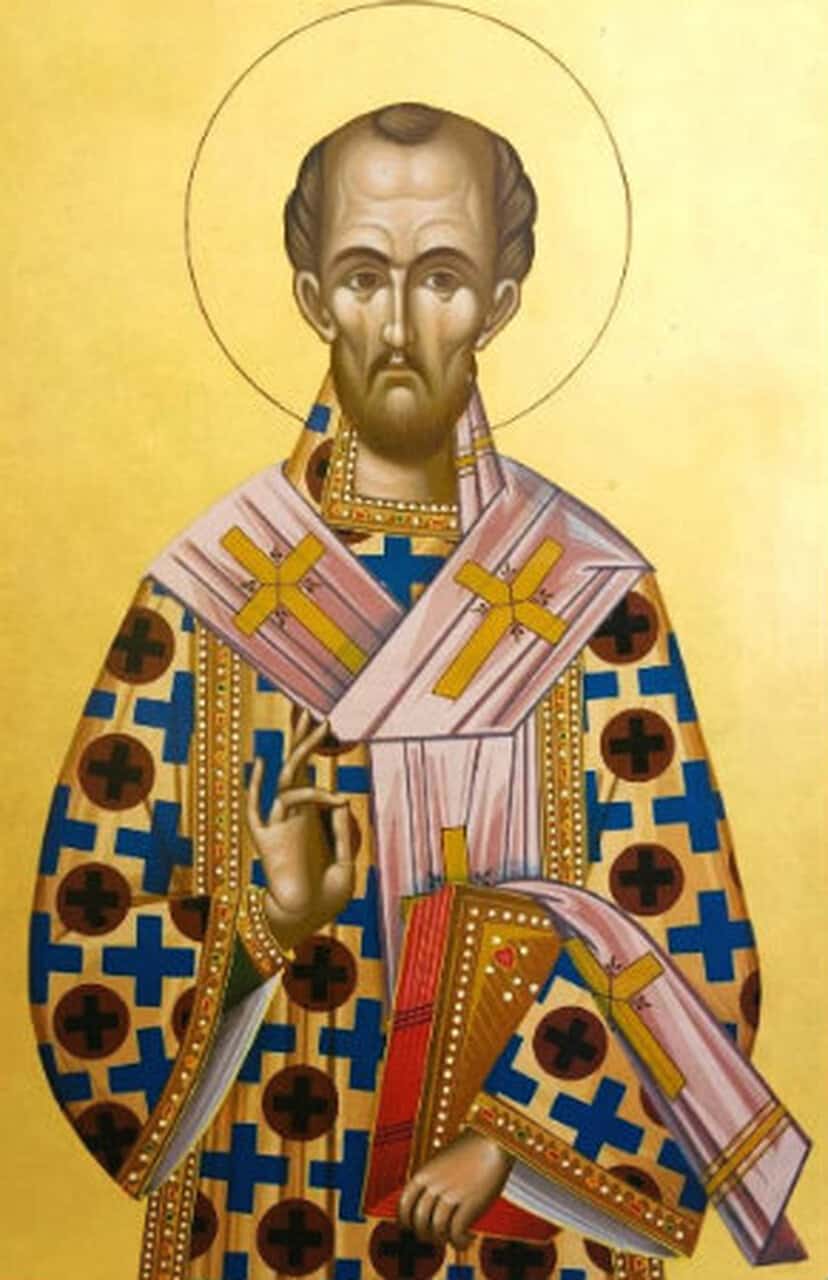
This perspective reminds us, believers, that earthly hardship is not a sign of abandonment, but an invitation to draw closer to our Savior. The early Church Fathers emphasize that enduring affliction with gratitude is a vital means of spiritual purification. Saint John Chrysostom writes:
“The mark of a soul that loves wisdom always gives thanks to God. If you have suffered evil, give thanks and it is changed to good. He has not sinned who suffered the evil but he who has done the evil.”18
St. John Chrysostom (c. 348-407 AD)
For the Copt, this patience is an active, vibrant confession of faith rather than a passive submission. Saint Mark the Ascetic instructs us that we must not claim to have acquired virtue unless we have suffered affliction, for without affliction virtue has not been tested.19 In this light, social marginalization and legal restrictions become a refining fire that proves the purity of our Orthodox heritage.
Ultimately, true spiritual maturity requires the practice of radical Christlike love and forgiveness toward those who cause us harm. Saint Isaac the Syrian explains that the path of God is a daily cross, noting that no one has ever ascended to heaven by living a life of ease. He writes beautifully on the divine perfection that the faithful are called to mirror:
“For the sake of His love for us and obedience to His Father, Christ joyfully took upon Himself insult and sorrow. In like manner, when the saints become perfect, they all attain to this perfection, and by the superabundant outpouring of their love and compassion upon all men they resemble God.”20
St. Isaac the Syrian (C. 600 AD)

The Journey Toward Justice and Reform
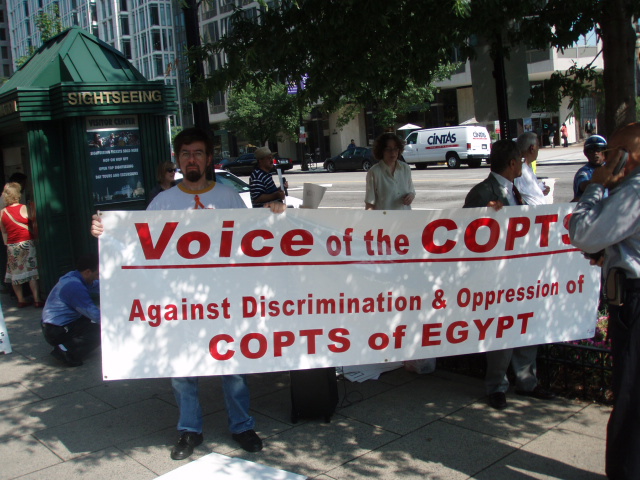
Source: Responsible for Equality And Liberty (R.E.A.L.), “DC: Egyptian Coptic Christians Protest for Human Rights, Equality, as President Obama Meets Mubarak” (August 18, 2009) R.E.A.L. Human Rights Coalition Blog
While the spiritual calling demands that we meet hostility with grace, it does not relieve society of its moral obligation to pursue justice and equity. Authentic reconciliation in Egypt requires structural and institutional updates:
First, the national educational curriculum must be fully reformed to promote pluralism, eliminate discriminatory teachings, and accurately honor the foundational contributions of Coptic civilization to the history of the nation.
Second, the discriminatory legal frameworks governing places of worship must be dismantled, ensuring that church construction and renovation are subject to the exact same clear regulations as mosques.
Third, anti-discrimination protections must be systematically enforced across employment, housing, professional sports, and political appointments, opening genuine pathways for Coptic citizens to serve as governors, university leaders, and public officials.
Finally, state security forces must be held accountable through independent oversight, bringing an end to historic practices of institutional abuse and ensuring the safety of all citizens.
A Personal Reflection on My Journey as a Coptic
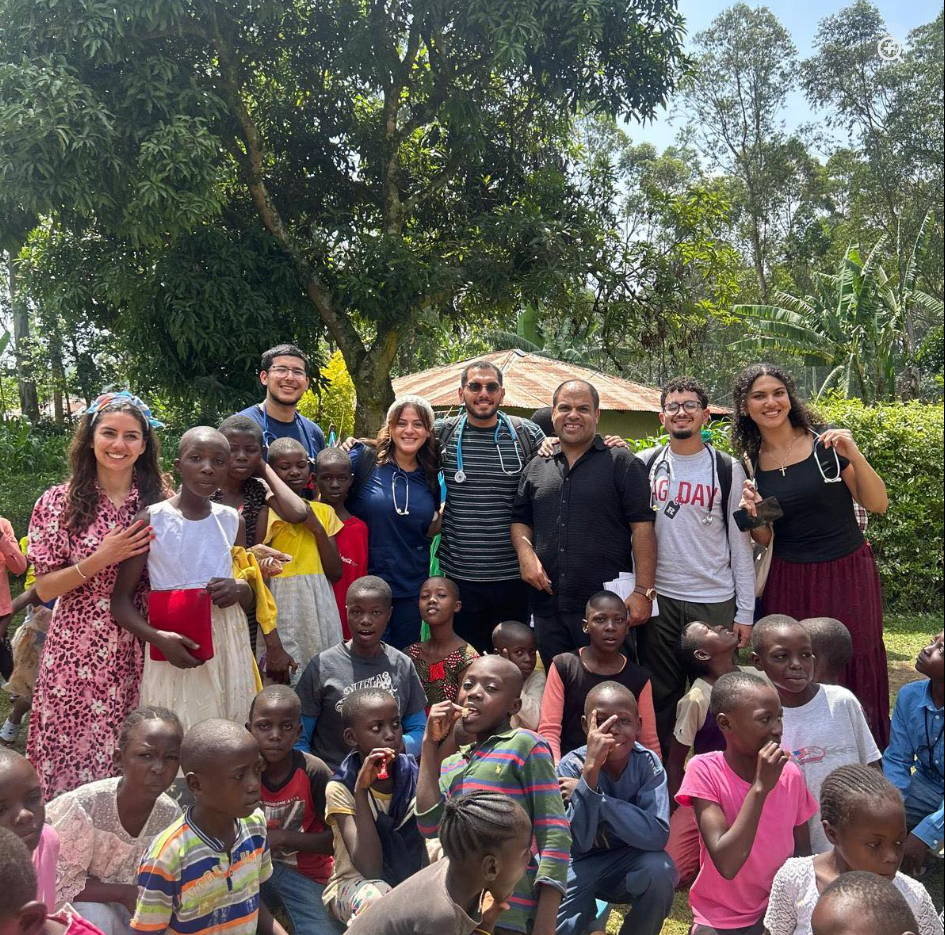
For me personally, analyzing these numbers, reports, and decrees dates back to my childhood as a Coptic Christian living in Al-Abbaseya, Egypt, located in the heart of Cairo Governorate and St Mark’s Cathedral. I am a Coptic Egyptian living in the United States, and this history is written directly into the fabric of my own life. Growing up, my relationship with my faith was shaped as much by the beautiful melodies of the liturgy as it was by a heavy, lingering anxiety. I grew up sitting in front of the television watching breaking news coverage of smoke rising from bombed churches, wondering if the next target would be our parish. Going to church on Sunday morning did not just mean getting dressed up with family, it meant navigating a gauntlet of armed security guards, metal detectors, and concrete barricades. We lived with the constant, heavy knowledge that our place of ultimate sanctuary was also a target, and we learned to pray through the quiet fear of ever present threats.
That bias followed us out of the church steps and into the classroom. I saw firsthand the subtle and overt discrimination in school, the way teachers and peers would look at you differently the moment your religious identity became clear, reminding you in quiet ways that you were an outsider in your own ancestral homeland.
Today, I am a medical student in the United States pursuing a degree in osteopathic medicine. In my training, I am learning to view human health through a deeply holistic lens. Osteopathic medicine teaches us that a person is not just a collection of symptoms, but an interconnected whole of mind, body, and spirit. When one part suffers, the entire being is disrupted. As I look closer at our global Coptic community, I see how these historic injustices have manifested as real healthcare disparities toward Coptic Christians. True health is impossible when a community is subjected to generational trauma, institutional exclusion, and systemic marginalization.
The prejudice that begins with an exclusionary school curriculum or a restricted church building law quietly echoes into the physical and mental well-being of vulnerable families, affecting their access to clinical care, financial stability, and peace of mind. Seeing these overlapping layers of prejudice is precisely what drove me to dive deep into this issue. As a future osteopathic physician, I know you cannot heal a person without understanding their environment and history. Healing our community requires us to pull back the curtain on this hidden discrimination. Guided by the resilient and forgiving spirit of the Church Fathers, we must continue to advocate for a future where no child has to pass through metal detectors to find God, and where every soul receives care, dignity, and justice, unto ages of ages.
Acknowledgements
I would like to extend my deepest gratitude to Deacon Christian Malik Azarius of the Ethiopian Church for his spiritual encouragement, wisdom, and continued support throughout the development of this work.
I am profoundly thankful to Fr. Beshoy Saleib and Fr. Abraham Azmy of the Virgin Mary and Archangel Michael Coptic Orthodox Church for their guidance, prayers, and support.
I also wish to sincerely acknowledge Dr. Jesse Nasta of Wesleyan University and Dr. Chris Bell of the University of Dallas for their academic mentorship, thoughtful insight, and encouragement in examining the historical and sociocultural dimensions surrounding the experiences discussed in this article.
Finally, I offer gratitude to all those within the Coptic Orthodox community whose resilience, faith, and testimony continue to inspire this work and bear witness to the enduring strength of the Church.
Footnotes
- See generally Pope Shenouda III, The Cross and Christian Suffering (Cairo: Coptic Orthodox Cultural Center).
- United Nations, Convention on the Prevention and Punishment of the Crime of Genocide, December 9, 1948, Article II.
- F. F. Andrawes and A. Orr Andrawes, Coptic Christians and Muslims in Egypt: Two Communities, One Nation (Cairo: American University in Cairo Press, 2019), 5.
- Lindsey Griffin, “Discrimination against Copts in Egyptian Sport Clubs,” Coptic Solidarity, April 3, 2020.
- “Egyptian Christian Copts on Prejudice in Egypt and Saudi Arabia,” Middle East Media Research Institute, November 12, 2002.
- Ibid.
- Fathia El Dakhakhny, quoted in reports published by Al Masry Al Youm regarding sectarian educational discrimination in Egypt.
- Ursula Lindsey, “With the Pope in Egypt, Debate on Al Azhar’s Role,” Al Fanar Media, September 20, 2018.
- Timothy Kaldas, commentary regarding Egypt’s church construction law and restrictions on Christian worship.
- “Characterizing the Copts in Egypt: Demographic, Socioeconomic and Health Indicators,” demographic and socioeconomic research study on Egyptian Christians.
- USA Today, reporting on attacks against churches during the Morsi era in 2013.
- International legal documentation regarding abductions and trafficking of Coptic Christian girls in Egypt between 2007–2012.
- CBS News, “Maspero: A Massacre of Christians in Egypt,” June 22, 2014.
- Egyptian Organization for Human Rights, reports documenting torture and custodial deaths in Egypt between 1993–2007.
- Alex Shalaby, president of Coptic Solidarity, commentary regarding continued discrimination against Christians in Egypt.
- Amnesty International, reports concerning torture and repression under the administration of President Abdel Fattah el-Sisi.
- Pope Shenouda III, pastoral writings on suffering and endurance in Christ.
- Saint John Chrysostom, homilies on thanksgiving amid suffering.
- Saint Mark the Ascetic, On Those Who Think They Are Made Righteous by Works.
- Saint Isaac the Syrian, Ascetical Homilies, Homily 34.
Works Cited
Amnesty International. Reports on torture and repression under the administration of President Abdel Fattah el-Sisi.
Andrawes, F. F., and A. Orr Andrawes. Coptic Christians and Muslims in Egypt: Two Communities, One Nation. Cairo: American University in Cairo Press, 2019.
CBS News. “Maspero: A Massacre of Christians in Egypt.” June 22, 2014.
Egyptian Organization for Human Rights. Reports documenting torture and custodial deaths in Egypt between 1993–2007.
“Egyptian Christian Copts on Prejudice in Egypt and Saudi Arabia.” Middle East Media Research Institute. November 12, 2002.
Genocide Convention. United Nations Convention on the Prevention and Punishment of the Crime of Genocide. December 9, 1948.
Griffin, Lindsey. “Discrimination against Copts in Egyptian Sport Clubs.” Coptic Solidarity. April 3, 2020.
Kaldas, Timothy. Commentary regarding Egypt’s church building law and restrictions on Christian worship.
Lindsey, Ursula. “With the Pope in Egypt, Debate on Al Azhar’s Role.” Al Fanar Media. September 20, 2018.
Pope Shenouda III. The Cross and Christian Suffering. Cairo: Coptic Orthodox Cultural Center.
Saint Isaac the Syrian. Ascetical Homilies.
Saint John Chrysostom. Homilies on suffering and thanksgiving.
Saint Mark the Ascetic. On Those Who Think They Are Made Righteous by Works.
“Characterizing the Copts in Egypt: Demographic, Socioeconomic and Health Indicators.” Demographic and socioeconomic research study on Egyptian Christians.


