Etymologically, the term ‘vocation’ originates from the Latin word ‘vocatio’; i.e. ‘to call, a summons’. Everybody to some extent has a vocation, perhaps even more than one; be it to marriage, celibacy, religious life, or sacerdotal ministry.
“And now, thus says the Lord God who made you, O Jacob, and who formed you, O Israel: “Fear not, for I redeemed you. I called you by your name, for you are Mine.” — Isaiah 43:1.
When speaking on the general calling of the early Christians, the catechism of the Coptic Orthodox Church stated:
“They lived in the world, but they were not of the world. They had a special vocation to sanctify the world by the work of God through them and within them: “For God called us not for uncleanness, but in sanctification” (1 Thess. 4:7) and “as He who called you is holy, you also be holy in all your conduct, because it is written, ‘be holy, for I am holy’” (1 Pet. 1:15–16).”
Under examination it is evident that God, to Him be Glory, calls us to holiness through different paths individually for our union with Him and sanctity. Each and every single member of the Body has been given gifts to minister before God and to their neighbor in love (Eph 4:11). These gifts which come down from heaven are by God Himself (James 1:17). Though they may be distinct, one is not superior to the other; as they all contribute to the expansion of God’s Kingdom when exercised in accordance to His Holy Will (1 Cor 12:14-18).
Personally, I have discovered my vocation at a very young age; though my understanding of it developed gradually. In context, I was not raised in the ancient Apostolic Christian tradition. Rather, I was born and raised Protestant, more specifically; Pentecostal (COGIC) by a devout African American Christian family which also has some Cape Verdean roots. Nevertheless, my mother had enrolled me in a Roman Catholic school at four years old called St. Josephs.
As apart of the school’s program, we would attend Church and Mass frequently. I recall noticing the differences of this church from the Pentecostal one that I grew up in. I was at awe with what I now understand to have been heaven on earth which I have tasted within this liturgical atmosphere; the sovereign liturgical chant, the use of candles, incense, holy water, the brightly illumined stained glass windows, and colorful and elaborate Renaissance style imagery and statuary, etc.
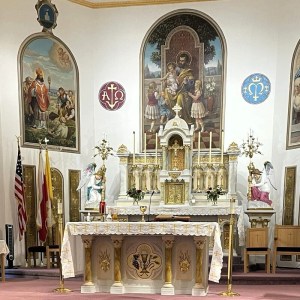
All of these captured my senses. I remember I’d go home and pretend that I was at church showing reverence; folding my hands, kneeling, genuflecting, processing in silence and the like. I remember also folding my hands in the same fashion at my family’s church; which was questioned as to why I was doing it by my cousins who’d say “you don’t need to do that.” Yet, once I reached the age of 8, the school had closed and I had lost all contact with this form of worship and spirituality.
Many years later, around the age of 14, I began to inquire about religion and spirituality in more dept. To me, Protestant theology was nonsensical given the lack of continuity with the ancient church and biblical exegesis. Therefore, I began to inquire about Catholicism given my history, and was received into the Church at 16. One of the doctrines that persuaded me the most was that of the Holy Eucharist; to which I fell in great love for.
I would normally pray before the tabernacle; and when praying I began to sense a quiet and calm peaceful calling in my soul from God asking me to serve Him. When I inquired of what He was calling me to do; He revealed to me that it was to serve Him in the Holy Eucharist at the Altar. I’ve eventually became an acolyte after being trained by my then spiritual father and priest at the Church of the Assumption; which happened to also be the church that my Cape Verdean / Afro American ancestors attended, married in, and even served at as acolytes.
Knowing this, I’ve began to study a 1962 missal that was given to me from my mother; one which happened to belong to my great great grandmother who was a devout African American Roman Catholic that married my Cape Verdean great great grandfather. The missal covered the history and meaning of the liturgical vestments used in the Latin Mass, the daily readings, the liturgical responses, and the like. Noticing how the Roman Catholic Church’s current liturgy was different; I’ve began to question what brought these changes and discovered that there were many innovations that were implemented within the church after Vatican II.
Nevertheless, I tried my best to restore some of the traditions of the old rite my local church that I’ve learned from the missal; i.e. the Roman hand prayer posture, genuflections, prayers at the foot of the altar (though I’ve said them quietly or prior to the liturgy), kneeling for the Eucharist etc. By God’s Grace I was successful in some regard since I restored the use of the cassock and surplice for the acolytes at my parish.
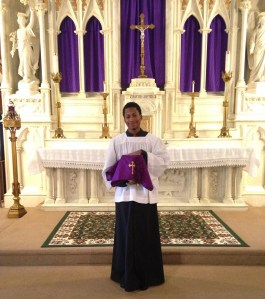
Though it was initially rejected by the priest who preferred the albs and cintures, the parishioners ironically expressed appreciation for me restoring the practice (as I bought my own and brought it to the church). This forced the priest to buy more sets of these vestments, and explains why this parish currently uses them till this day. Yet, any other suggestions that I presented; such as the restoration of celebrating the Latin Mass at the high altar of the parish, only having altar boys etc, was dismissed.
Even so, I’d serve the liturgy frequently and faithfully; either on Saturday nights (Sunday vigils) or Sundays; sometimes twice in a row since there was more than one liturgy. I had a great love for serving and was eventually appointed the main acolyte or MC of the church. Everything about the service I loved; preparing the sacred vessels and cleaning them, preparing the candles on the main altar and processing with the processional candles, swinging the thurible (censor), processing with the cross, holding the liturgy book for the priest as he read from it, lectoring, and the like.
Serving had become the highlight of my week, and eventually the topic of considering a vocation to the priesthood had become commonly suggested by members of the parish, and by extension, even clergy. One time I had served with an exorcist priest who, though we prayed in the Novus Ordo, would pray many of its prayers in Latin and in the traditional Gregorian tone.
I recall at one point of the liturgy I was kneeling with my hands folded before the tabernacle as he said a prayer in Latin (I believe He was saying behold the lamb of God while holding the Eucharist). He then looked towards me, saw that I was very serious in serving, and said: “You certainly have a vocation brother”.
This is not to paint a portrait of me as some saint, nor do I intend to appear sanctimonious; but for context these are necessary details since I had a true love for Christ in the Eucharist and the altar; and still do till this day. At any rate, altar service was my entire life and an escape from the tempting and sinful environment around me.
Given my perceived call to the priesthood, and my love for the traditional Latin Mass; I began inquiring about seminaries or religious orders that I could join; such as the FSSP, SSPX, etc. I also had the approval and encouragement of the bishop at the time (Archbishop Blaire) who knew I was looking into the FSSP and gave me his blessing to pursue my vocation with them.
After years of preparation and spiritual guidance from my then spiritual father, and through much prayer and discernment; I’ve discovered that the priesthood was not my true calling. Not because of the demands of celibacy, but because it is not my calling to preside over the Eucharist; but rather, to serve as He initially called me.
Eventually, I’ve discovered that there was potential that I may have instead had a vocation to the Diaconate; though in the Roman church you have to be at least 35 years old to be a “permanent” deacon. However, for some time I’ve left the idea alone and, because of the modernism within the Roman church, I’ve began to seek refuge in the Eastern Rites.
This was because I’d eventually become affiliated with traditionalists organizations (I was a lay member and affiliate of the Transalpine Redemptorists; though I’ve also become a member of with the Recognize and Resist movement which would suggest that I must avoid the novus ordo liturgy and instead attend the eastern rites if a Latin Mass was not available). I would also blog about the crises in the Roman Catholic Church at my old website traditionalaltarboy.com. Thus, I would eventually attend the eastern rites (Ukrainian and Melkite) regularly and was later made an acolyte for these communities as well.
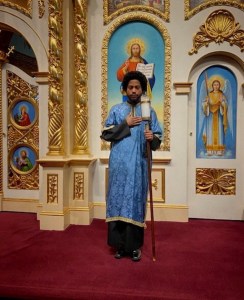
The call to the diaconate did spark again, and people have suggested it; though I initially didn’t consider pursuing it until I got much older and of course married. Yet, I did feel a sense of peace with the idea of being a deacon, especially seeing how the office is exercised in the eastern tradition. However, the idea of priesthood robbed me of my peace, even if I had the option to marry (and still does).
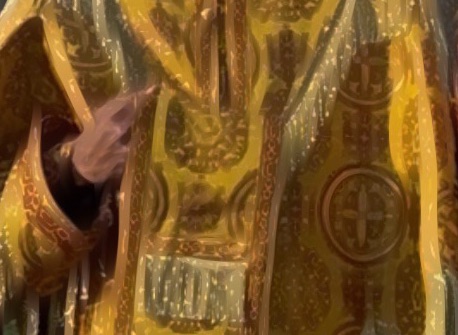
Eventually, God made my vocation even more clear to me at one particular time in my life. One day I was taking a bus to school in the beginning of college, and I began to become spiritually dry and lukewarm; even to the point of listening to things I should not have been doing. Yet, I recall as I was walking the street hearing a voice saying: “Do not get too attached to these things, for one day you will be a Deacon”. An image in my mind of me in gold Diaconal vestments then randomly appeared quickly. So I kept this in my heart.
Just years later, I began to visit the local Coptic Orthodox Church that my family friends from Eritrea would attend and ask me to visit sometimes with them; though I was initially reluctant due to traditional Catholic ecclesiology. Regardless, I’d start to investigate the teachings of the Orthodox Church with the attempt of refuting them to assure myself of what I perceived to be the “truths of the Catholic faith”, only to find that many of Romes’s dogmas developed and departed from Patristic ecclesiology and theology.
Ironically, even the Eastern Catholic Churches that I’ve attended considered themselves to be preservers of the Orthodox faith and members of the Orthodox Church at large that happened to just be united with Rome. But such a view to does not reconcile with either Orthodox or Roman Catholic ecclesiology; but suggests instead some form of branch theory theology.
I was eventually received into the Oriental Orthodox Church through my Eritrean and Coptic community after much prayer through Baptism, Chrismation, and Holy Communion; and a month later was tonsured a reader at the recommendation of my confession father. I was then appointed by the fathers to serve the Habesha youth; which I did happily for several years until now.
When the Habesha community in my area began to merge with separate one from another area, who happened to take the old Church building which had belonged to the Coptic Church (since they moved to a larger building that used to be a Roman Catholic Church formally known as St. Stephen’s), I would continue to serve my youth and follow them to this new church and then eventually later accumulate much more youth to serve from the new community. I was eventually asked to be a Deacon of the Church (many times than I can count; sometimes even forcefully); though I initially rejected as I was not ready since I was just baptized.
To come back to the topic of my tonsuring to the lectorate, it is considered to be the first official rank of the minor orders / minor ‘diaconate’ within Oriental Orthodoxy. There is a part within the Coptic catechesis / vow which therefore asks for the intercession of St. Stephen. It says: “May God situate him with the noble, faithful witness, Stephen the proto-martyr and the seven honorable deacons…”. Because of this, I’d ask St. Stephen for his intercession. He eventually became my close companion and one of my patron saints; as I’d see undeniable signs from him.
For instance, there was a time that I was feeling discouraged with my service due to people, including clergy, diminishing my call to altar service due to my rank. Though I did not know at the time that readers were to not serve in the altar as acolytes per church law, despite current practice, I felt guilty and considered to stop serving since not only did I want to do things canonically correct; but because I felt unworthy and even hurt that my calling to serve at the altar was being stripped away from me.
One Saturday night at my church I went before the icon of St. Stephen, placed my head upon him, and cried to him internally; telling him that I was considering leaving the service. The next day, however, I was asked to serve. I vested, and sat on the side seats flanking the altar with the other chanters, readers, and sub deacons. When it was time for the Synaxarium to be read, one reader got up and, without me knowing beforehand, revealed that it was the feast of the translocation of the Body of St. Stephen (2nd Sunday of Thoout; September 25,2022). I was in shock.
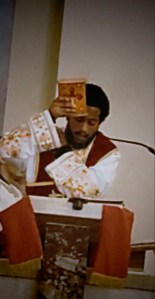
When it was eventually time for the Gospel to be read, one of my fathers among the Diakons randomly, and without warning, asked me to read the Gospel for that day. The Gospel was Luke 10:21-28. It wasn’t until after the liturgy that one of my good friend’s mothers came to me, telling me that she also recorded me reading the gospel. It’s a tradition that she’s been doing for her son since he was little. She told me because I was like her other son that she also recorded me. I still have the video till this day. It was as if St. Stephen had her record to provide me with infallible proof that this truly happened. Given the events of this day, this was the first sign that I’ve seen from St. Stephen.
There were other things that I’ve noticed St. Stephen to do. For instance, ever since I was a teenage acolyte in the Roman Catholic Church, I’ve grown to become fascinated with the Armenian church’s liturgy. I recall having a picture of an Armenian deacon with red and gold vestments and a large crown while holding a candle in one hand and a censor in another. I remember telling myself: “that’ll be me some day”, though I did not mean permanently within the Armenian rite but just as a brother and participant in the rite if I ever had the blessing as a future deacon (though it would’ve been with the Armenian rite Catholics rather than the Armenian Orthodox since I was a Roman Catholic at this time).
Due to there being correspondence between a good friend of mine and Deacon from the Coptic Church and the then priest of one particular Armenian church, I’ve decided to visit on one particular Saturday just to introduce myself to the priest; not knowing that I’d be arriving for the celebration of the Soorp Badarak (Holy Liturgy) for that day; as a young man was being received into the Church. I loved every part of the liturgy. I stayed after liturgy and later introduced myself to the priest and the parishioners; who were warm, loving, and welcoming; many who have become great friends.
What I’ve expected to just be a simple and quick visit eventually turned into me staying there the entire day conversing and fellowshipping with everyone there. Time accelerated quickly, and it was then time for vespers. I was asked to stay; just to later be asked to vest with the shabig (robe) and orarion (stole) and to cense the church as the priest said prayers. Inside, I was jumping with joy and excitement, though externally I kept my composure to preserve reverence and dignity. It not only brought me back to my initial acolyte days when I held the responsibility of being a thurifier, but it fulfilled that dream that I had of eventually serving the Armenian liturgy in a Diaconal setting. And guess who happened to be the patron saint of the parish? You guessed it. St. Stephen. This was my second sign from him.
A third sign that I’ve received from St. Stephen was very interesting. After 5 years of prayer and discernment regarding the Ethiopian Church’s request for me to become a Deacon (though I’ve expressed contentment with just being even a sub deacon, though that request was denied), with the blessing of my spiritual father who encouraged me, and because of the peace that I’ve gotten with this decision which was obviously a vocation, me and the Aba of the Ethiopian Church took a trip to visit the Bishop of the Diocese at his home; my beloved father His Grace Abouna Petros. We were acquainted since we would see each other at church events that were hosted by my friend’s churches; and because he would visit the Ethiopian church in my area given that it’s under his jurisdiction.
My Aba and I gave him a report of the service that I’ve been doing at the church, as well as providing him with a background of who I was and my history with altar service and service in general. It was a pleasant conversation, especially given his humility, encouragement, blessing, and support which I greatly appreciated. I felt heard and understood. It was then that he blessed my service and decided that he would like me to be a Deacon for my local church; though at the time we did not have a set date for when.
However, either later that night when I arrived home, or the following day (I can’t remember), something told me to check the Synaxarium of the Ethiopian Church for the day that I’ve met with His Grace. When I checked it (TEKEMT 17 / October 27,2025), it was the Feast Day of St. Stephen’s death. “And on this day also died Stephen, Archdeacon and Protomartyr. Salutation to Stephen”.
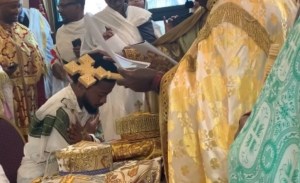
These were signs of confirmation by my beloved friend and patron, St. Stephen, that the Diaconate was my true vocation. I was then, by the Grace of God, ordained on December 21st, 2025. It is with this service that, despite its challenges and my own flaws, that I find peace, fulfillment, and security in my calling to serve God at the altar and His priests of His Holy Church.
I want to thank my family and my beloved brothers and sisters in Christ who have supported me on my journey. You all know who you are. I ask Almighty God to grant me the graces that I need to exercise this office in accordance to His Holy will until my last breathe, and that St. Stephen, St. Lawrence, St. Ephraim the Syrian; and all of the Deacons of the Church throughout time to pray for me, my service, and salvation.
For those who have served well as deacons obtain for themselves a good standing and great boldness in the faith which is in Christ Jesus. (1 Timothy 3:13).
To God be the Glory forever, Amen.
— Dn. Christian Azarias
 Faith Unto Ages