
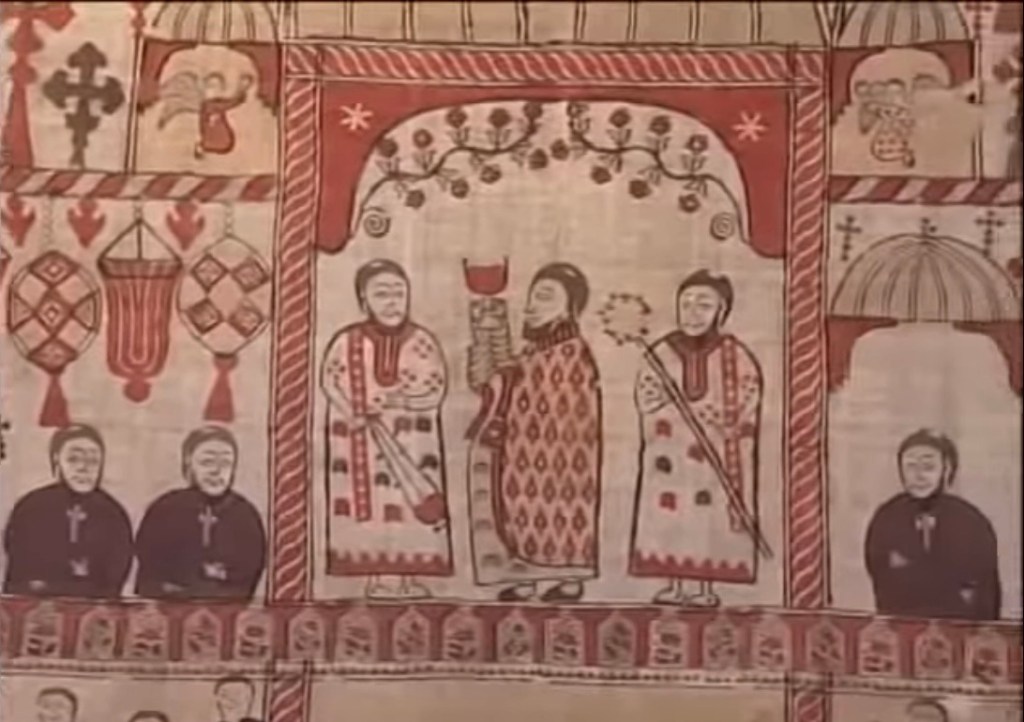
In Orthodoxy, the Divine Liturgy is regarded as being Heaven on Earth. This is because Jesus Christ, truly and actuality, becomes present on the Altar in the Sacrament of the Holy Eucharist.
“When we see the Lord as a sacrifice placed on the altar, the priest praying over the sacrifice, and the congregation being cleansed by the precious blood, can you say that you are still standing with men on earth? … Did you not ascend directly to heaven?”
— St. John Chrysostom, Homilies on Ephesians 3.
Because of this, the various Liturgical Families of the Orthodox Church (Armenian, Coptic, Syriac, Tewahedo, etc.) use symbols in various forms to direct our attention to this mystical reality. Hence, the use of incense, candles, iconography, vestments, chanting, and the like to capture our senses.
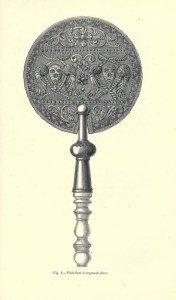
An ancient custom from the 1st – 4th century that was preserved amongst our sister churches the Armenians, Syrians, and Jacobites that we lost within the Coptic and Tewahedo tradition is the use of the Ripidion in the Altar (Though some Coptic Churches do process with them and currently use either a lefafa or a small flag as their substitute). The Ripidion is a liturgical fan usually made of metal and decorated with an image of the seraphim or cherubim to symbolize their presence since, again, Jesus is truly present in the Holy Eucharist on the altar. In some traditions, such as the Armenian, Syrian, and Malankara; small bells encircle the fan and are manipulated to swiftly ring during certain portions of the liturgy to symbolize the sound of the wings of the said heavenly beings (Ez 1:24).
Continue reading “Forgotten Diaconal Functions of the Alexandrian Tradition”
