Throughout history, man has made attempts to explain the origin of all things. This is evident when examining the various cosmological stories of antiquity, such as in the case of the ancient Egyptians and Babylonians who attributed the birth of existence to various deities. These deities had fallen human characteristics, ambitions, and interests.
To cite Holmon’s Quicksource:
“Egyptian and Babylonian (as well as the earlier Sumerian) creation myths were inherently polytheistic, with teeming masses of powerful but flawed gods competing for the spotlight… cohabitations, base motives, and warring between the chief gods led to the incidental creation of other gods as well as the earth, sky, sea, and all living things”
– Whorton, Mark S, and Hill Roberts. Holman Quicksource Guide to Understanding Creation. Nashville, Tennessee, Holman Reference, 2008, 41-42.
These deities of the said groups were not only limited, as they wrestled “with eternal matter to fashion heaven and earth” (Whorton, 37) but were unjust and grudging against the human race. For instance, the Babylonian Enuma Elish tells that the human race was created from the blood of the defeated Kingu, who was seen as being the commander of demons, from the underworld, and an enemy to “superior” deities. Consequently, a personal and loving relationship between humanity and the gods was lacking; as they were created not only as a result of conflict, but to perform difficult labors of the gods such as building, digging, etc.
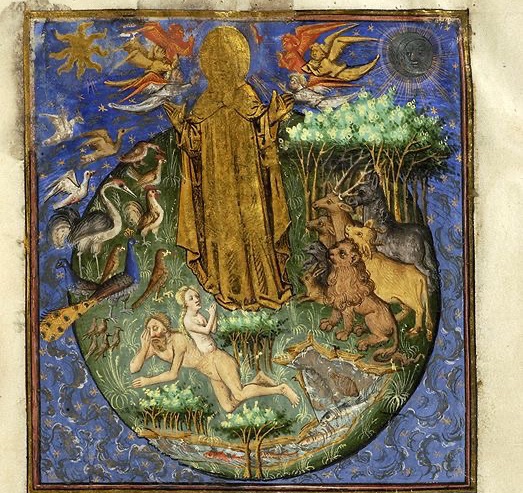
On the contrary, the Holy Scriptures speak of there being One God that is completely good, just, eternal, omnipotent, sovereign, unlimited, and sacred. As such, He was not in need of any other assistance, nor in need of pre-existent matter to create; as He made all things out of nothing by His Word. The idea of a deity needing pre-existent matter was one shared with, and perhaps adopted, by Plato.
Continue reading “The Superiority of Biblical Cosmology over Pagan Creation Myths”

 Faith Unto Ages