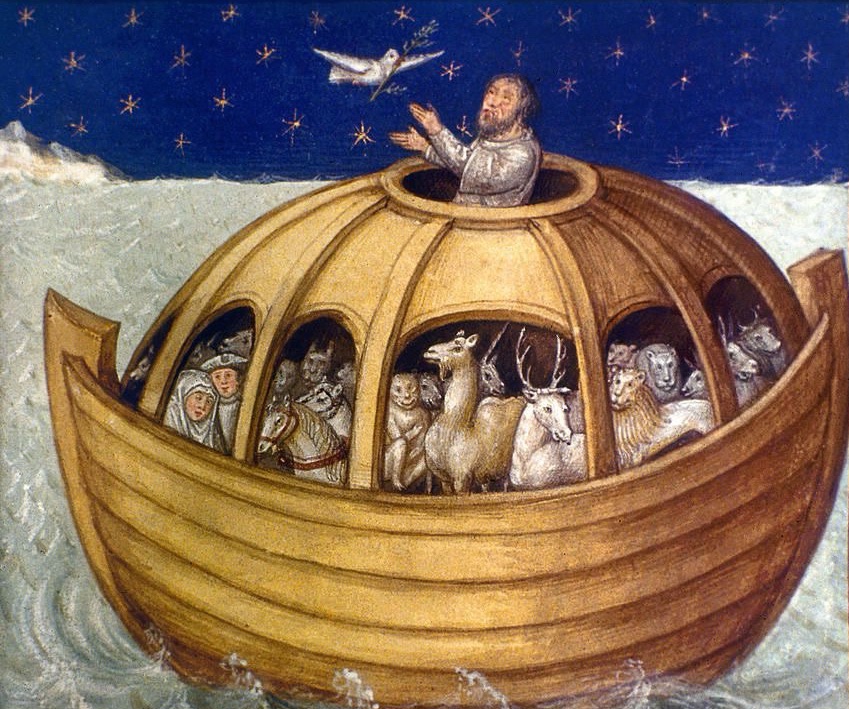
Old Testament Typology: The Ancient Deluge, the Ark, and the Foreshadowing of Christ

In Orthodox Christian theology, there is a form of biblical exegesis that is used to pinpoint prophetic symbols, events, and statements which foreshadow the Word Incarnate known as Old Testament typology. Though there are multiple examples that we could examine, we will only be discussing one within this essay, namely: Noah’s Ark. The prophet Moses tells us that during the antediluvian period, God was displeased with mankind due to their accumulation of wicked deeds, practices, and thoughts. In the words of our Blessed Lord:

“I will blot out man whom I created from the face of the earth, from man to cattle, and from the creeping things to the birds of heaven, for I am grieved I made them” (Genesis 6:7).

A source of God’s outrage was that man — who was granted the gift of immortality — was tragically returning to corruption, sin, and death as a result of the fall. Therefore, man was in fact subjecting themselves to these perils and as a result was consequently perishing.  St. Athanasius gave us an image of sin running rampant upon the earth when he said: 

“[Man] having to begin with been inventors of wickedness and called down upon themselves death and corruption; while later on, having turned aside to wrong and exceeding all lawlessness, and stopping at no one evil but devising all manner of new evils in succession, they have become insatiable in sinning. For there were adulteries everywhere and thefts, and the whole earth was full of murders and plunderings. And as to corruption and wrong, no heed was paid to law, but all crimes were being practised everywhere, both individually and jointly. Cities were at war with cities, and nations were rising up against nations; and the whole earth was rent with civil commotions and battles; each man vying with his fellows in lawless deeds. Nor were even crimes against nature far from them…”

– On the Incarnation, 5.3-8.
Continue reading “Old Testament Typology: The Ancient Deluge, the Ark, and the Foreshadowing of Christ”

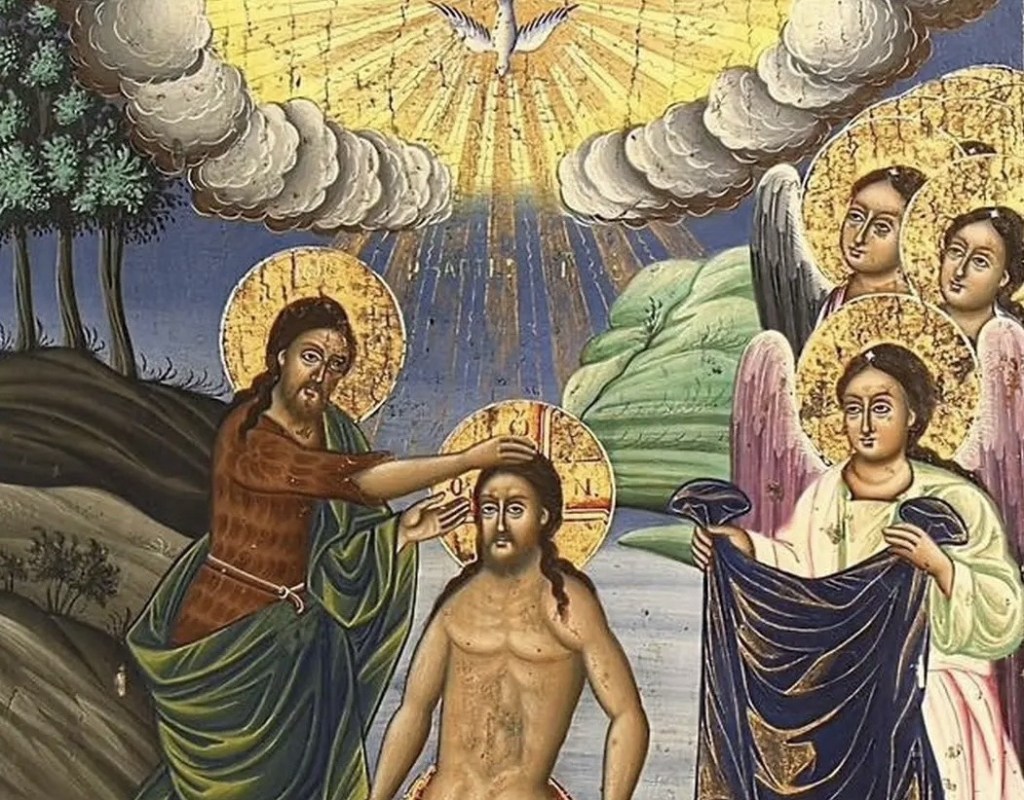
Why Christ Entered the Waters: A Doctrinal Study of Revelation and Fulfillment

When our Lord traveled from Galilee to the River Jordan , His cousin St. John the Baptist was preaching the necessity of repentance. Those that accepted the message of St. John would be baptized in water while also publicly confessing their sins (Mt 3:5-6). The rite of immersion in water was something which was shared with a certain Jewish sect known as the Essenes. Though debated, some scholars believe that St. John the Baptist may have been an Essene himself with his own following, or at least influenced by them; given not only their commonality in using water, but the use of apocalyptic language.

Now, with these words in mind: the baptism by which the forerunner was administering was very limited, as it was incapable of regenerating the soul, lacking the Grace of the Holy Spirit. Hence, it was not the Christian Sacrament of Holy Baptism.

To cite the Baptist directly:

“I indeed baptize you with water unto repentance, but He who is coming after me is mightier than I, whose sandals I am not worthy to carry. He will baptize you with the Holy Spirit and fire.”

– Matthew 3:11

As we know from Divine Inspiration, Jesus was not in need of repentance, as He was without Sin (c.f. 1 Peter 2:22). This explains the objection of the Baptist: “I need to be baptized by You, and are You coming to me?” (Matthew 3:14). These words alone demonstrate the sinlessness of the Lord. Yet, the Lord, in His humility, willfully condescended to the form of a sinner.

Or, to cite St. Gregory of Thaumaturgus:

“He approached him as one of the multitude, and humbled Himself among the captives though He was the Redeemer, and ranged Himself with those under judgment though He was the Judge, and joined Himself with the lost sheep though He was the Good Shepherd who on account of the straying sheep came down from heaven, and yet did not forsake His heavens, and was mingled with the tares though He was that heavenly grain that springs unsown.”

– On the Holy Theophany, or on Christ’s Baptism, Homily IV.

Continue reading “Why Christ Entered the Waters: A Doctrinal Study of Revelation and Fulfillment”

Reflection: Why was Jesus Baptized? The Feast of Epiphany & Biblical Catechesis

My brothers and sisters, today I wanted to share some catechesis for the Holy Feast of Epiphany:

As we know, we celebrate the baptism of Jesus within the Jordan river. But why? Is not baptism used for the remission of sin? Was Jesus not sinless? Below I will answer the reasons why our Lord was baptized.

1. Christ was baptized to fulfill the Old Testament story of Exodus. How so? Because: Just as God called the Israelites out of the land Egypt through water (Exodus 12) to which they later passed through the Jordan to enter the promised land (Book of Numbers), so has Christ been called out of Egypt (Matt 2:15), to also later pass through the Jordan through His baptism to show that He is the fulfillment of Israel. Thus His words to John: “It is fitting to fulfill all righteousness.” (Matt 3:15).

Continue reading “Reflection: Why was Jesus Baptized? The Feast of Epiphany & Biblical Catechesis”