When Carnal Reason Ends, Divine Revelation Speaks: The Folly of Chance and the Glory of Creation Out of Nothing

Throughout time, man has vainly attempted to explain the origin of all things without accrediting creation to an Intelligent Mind. Though often believed to be only a modern phenomenon, philosophers of antiquity had a variety of opinions on this matter. An idea believed by some of those from ancient Greece was one which suggested that everything came into existence by mere chance. Addressing this error, St. Basil wrote:

“Deceived by their inherent atheism it appeared to them that nothing governed or ruled the universe, and that was all was given up to chance.”

– Basil of Caesarea, Hexaemeron, Hom. 1.1.2. 

Man had invented a plurality of other ideas to explain creation as well — too many which would expand beyond this article to cover. But as most are aware, science is constantly evolving. It is almost certain that the latest recent discovery will triumph over that of what preceded them. Not ignorant to this, St. Basil adds:

 “The philosophers of Greece have made much ado to explain nature, and not one of their systems has remained firm and unshaken, each being overturned by its successor.”

– Basil of Caesarea, Hexaemeron, Hom. 1.1.2. 

Despite the inconsistencies of scientific hypotheses, some have proven to be in favor of what was already revealed in Scripture, which we will cover momentarily.

Continue reading “When Carnal Reason Ends, Divine Revelation Speaks: The Folly of Chance and the Glory of Creation Out of Nothing”

An Apologia for Iconography

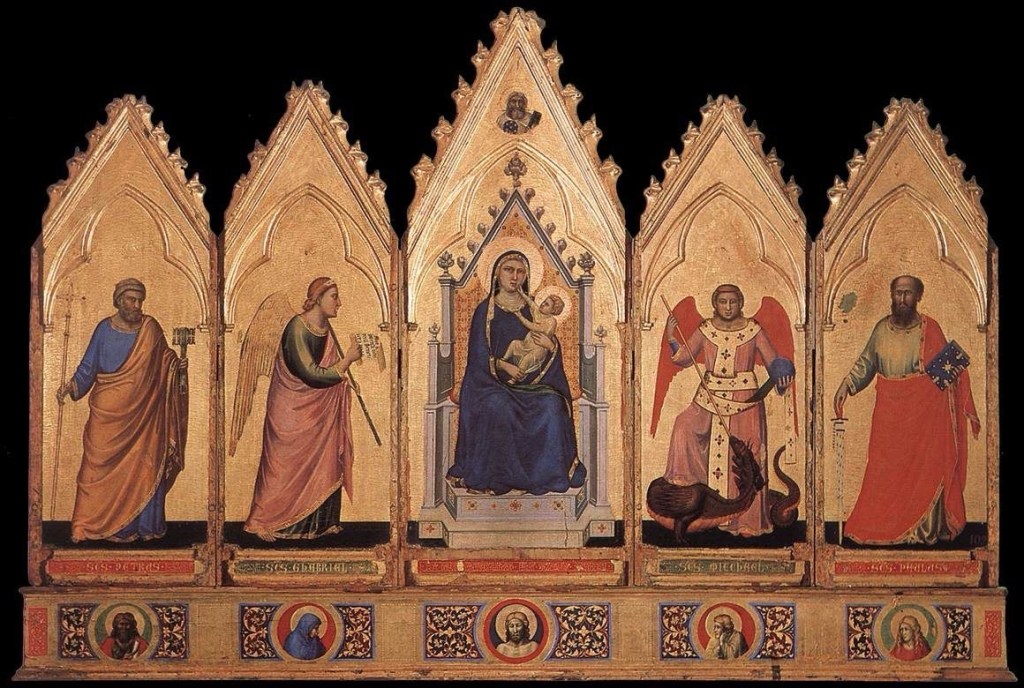
Iconography constitutes a defining element of Orthodox ecclesiastical architecture. The holy icons can be found on walls, ceilings, domes, windows; and are even on liturgical vestments of priests and deacons, the curtain before the altar, bibles & gospel books, and the holy vessels. The icons vary in what they depict, namely; The Holy Trinity, the Incarnate Word -Jesus Christ, St. Mary, the Angels, and the various Saints canonized by the Church. They are rich in color, convey theological truths, and illustrate events from sacred scripture or the lives of the saints.

Because the Orthodox decorate their churches in this fashion, and venerate the persons depicted, charges of idolatry have been made by Non-Believers, namely; Muslims, Jews, Jehovah’s Witnesses, certain Protestant sects, and the like. In the case of the said groups who uphold the Bible to be authoritative, with the exception of Islam, they refer to Sacred Scripture and accuse the Orthodox of not following the Bible and God’s Holy Commandments. A common source for their claim is Exodus 20:2-6, which we will review in detail briefly.

It is worth noting that, for the Orthodox, the charges of idolatry are appalling and even offensive to pious ears. This is because the Church, being the Body of Christ, confesses the Holy Scriptures to be Divinely Inspired, Inerrant, and Infallible. Wherefore, to the Church, the faith revealed by God through the Bible is without compromise (c.f. 2 Timothy 3:16).

Thus, the Holy Church continues in its sacred doctrines, especially regarding there being One God: The Father, Son, and Holy Spirit, One in Essence. This was the faith by which the Apostles, Confessors, Martyrs, and Early Church Fathers diligently taught, preserved, and defended; even to the point of blood.

Granted, because the Church is careful in her reverence for the sacred scriptures and the persons who preserved the true faith that can be found within them; then she also cares for the very teachings of the same persons that handed down the spotless dogmas to us. This is what earns the Church the title: “Orthodox”. This also explains why the Church professes the Nicene-Constantinopolitan Creed every Sunday to disqualify any idea of there another God, as polytheism conflicts with Church dogma and the Gospel Message at large.

Continue reading “An Apologia for Iconography”

An Orthodox Apologia for the Intercession of Saints

Concerning the Orthodox Church’s teaching on the intercession of saints, heretics often argue that it is both idolatrous and unbiblical. When the Orthodox Christian is challenged on this matter, they are forced to respond to at least one of the following objections: ‘How could the saints hear your prayers if they are dead?’, ‘praying to saints is idolatry!”, “where is that in the Bible?”, & “the Bible says that there is only one Mediator between God and Man.”

It is important to note that the Holy Orthodox Church does not by any means disagree with the latter statement presented above, given that this comes directly from Divine Revelation itself (c.f. 1 Timothy 2:5, Heb 8:6, 9:15, 12:25, etc). Before we address the objections to the doctrine of the intercession of the saints, it is necessary to first define Christ’s role as the Mediator between God and man in detail. 

Continue reading “An Orthodox Apologia for the Intercession of Saints”