The Theology of the Holy Trinity – St. Gregory of Narek

“Beneficent, almighty, awe-inspiring God, good Father, charitable donor of mercy, whose very name heralds the good news of your grandeur, compassion and fatherly affection, you are gentle even toward the bitter and discontented.

With you also is your Son, who is like you, whose hand is strong like yours, whose awesome reign is eternal like yours, whose exaltation is shared with you in your creation.

So too the Holy Spirit of your truth, that flows from you without end, the perfect essence of existence and eternal being, is equal to you in all things, reigning with the Son in equal glory.

Three persons, one mystery, separate faces, unique and distinct, made one by their congruence and being of the same holy substance and nature, unconfused and undivided, one in will and one in action.

One is not greater, one is not lesser, not even by an eyelash, and because of the unobscurable light of heavenly love revealed in our midst both have been glorified with a single crown of holiness from before the ages.”

– (Speaking with God from the Depths of the Heart, Prayer 13, A).

The Incarnation: The Recapitulation of Adam in the Eternal Word

Prior to going back to Egypt to liberate the children of Israel from captivity, the Prophet Moses had an encounter with God on Mount Horeb. Seeing the glory of God being manifested through a burning bush, he fell to his face in fear of looking at God, as God had revealed to him: “I am the God of thy father, the God of Abraham, the God of Isacc, and the God of Jacob” (Exodus 3:6). God revealed to him that He was, out of His love and compassion, displeased of Israel’s bondage to captivity, and that He would deliver them and bring them to a land which is good, large, and flowing with milk and honey (Ex 3:7-9). After God had told Moses that He would send him before Pharaoh to deliver the nation of Israel, he had doubts pertaining to his capability; and also questioned how he should identify God when the Israelites were to ask of His Name. In response, the Lord told the Prophet: “I AM THAT I AM … thus you should tell the children of Israel; ‘I AM has sent me unto you’” (Ex 3:14). 

This Holy Name given by God, which was revealed to Moses by His Word, emphasizes that “God is the supreme existence, and is therefore unchangeable, the thing that He made He empowered to be, but not to be supremely like Himself” (Augustine of Hippo, The City of God, Book 12, chap. 2). Because of this sacred truth, St. Moses tells us that it was “In the beginning, God created the Heavens, and the Earth” (Genesis 1:1), as He is ever eternal, infinite, without beginning, without end, and the Creator of all things and the source of their very existence out of nothing – all by the Self-Same Word (Genesis 1:3-31). St. Augustine tells us that when God created all things, “He communicated a more ample, to others a more limited existence, and thus arranged the natures by ranks” (The City of God, Book 12, chap. 2). In other words, when God created all things, He established a hierarchy; with man being the highest of all the carnal creatures, “For man is more honorable than any created thing…” (John Chrysostom. Homily 56 on the Gospel of John).

Continue reading “The Incarnation: The Recapitulation of Adam in the Eternal Word”

The Sins of the Tongue and Eternal Damnation – St. John Chrysostom

“Since then “He hath purged our sins,” (Hebrews 1:3), let us continue pure; and let us receive no stain, but preserve the beauty which He hath implanted in us, and His comeliness undefiled and pure, “not having spot or wrinkle or any such thing.” ( Ephesians 5:27). Even little sins are “a spot and a wrinkle,” such a thing, I mean, as Reproach, Insult, Falsehood. 

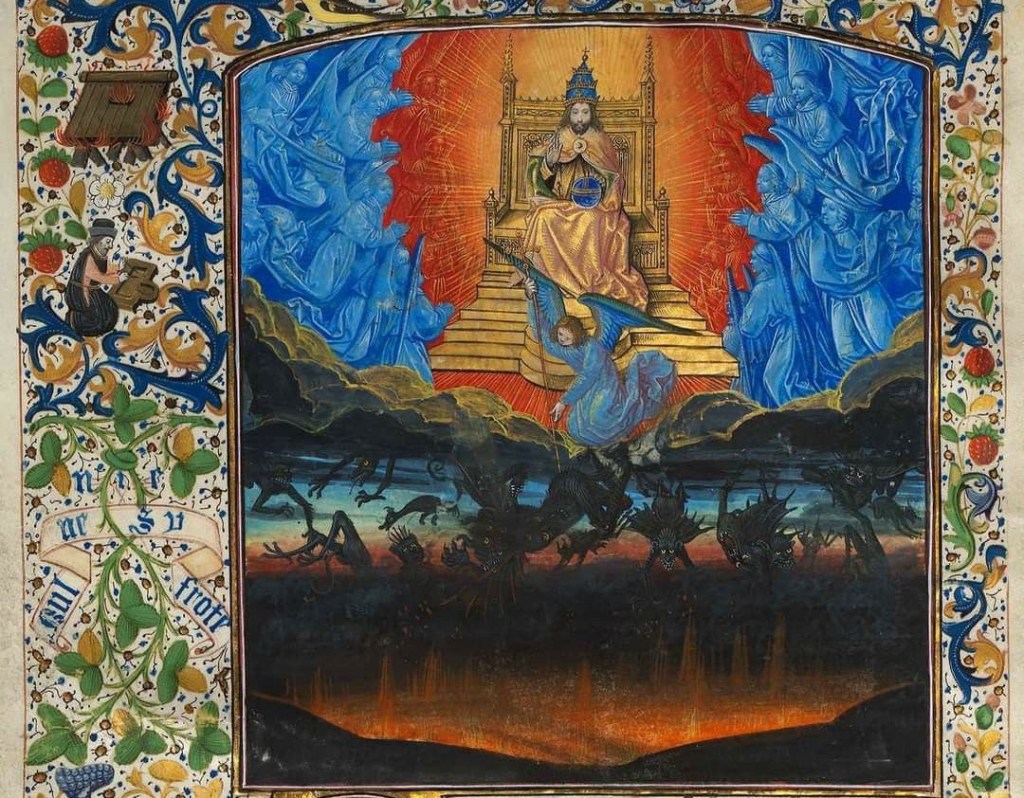
Nay, rather not even are these small, but on the contrary very great: yea so great as to deprive a man even of the kingdom of Heaven. How, and in what manner? “He that calleth his brother fool, is in danger” (He saith) “of hellfire.” (Matthew 5:22.) But if it be so with him who calls a man “fool,” which seems to be the slightest of all things, and rather mere children’s talk; what sentence of punishment will not he incur, who calleth him malignant and crafty and envious, and casteth at him ten thousand other reproaches? What more fearful than this? 

Continue reading “The Sins of the Tongue and Eternal Damnation – St. John Chrysostom”