Meditation on the Holy Eucharist: Becoming Immoral – St. John Chrysostom

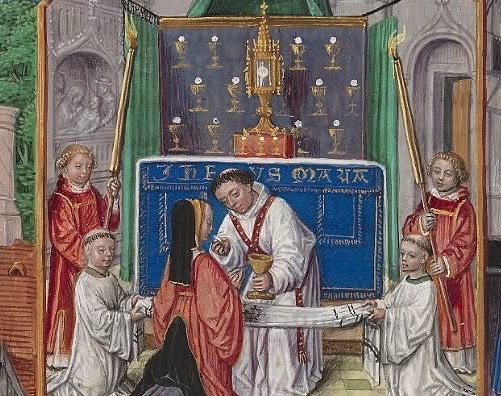
“[When you see the Table set before you], say to yourself, ‘Because of this Body am I no longer earth and ashes, no longer a prisoner, but free: because of this I hope for heaven, and to receive the good things therein, immortal life, the portion of angels, converse with Christ; this Body, nailed and scourged, was more than death could stand against; this Body the very sun saw sacrificed, and turned aside his beams; for this both the veil was rent in that moment, and rocks were burst asunder, and all the earth was shaken. This is even that Body, the blood-stained, the pierced, and that out of which gushed the saving fountains, the one of blood, the other of water, for all the world.’” – (Homilies on the First Epistle of St. Paul the Apostle to the Corinthians 24.7 (NPNF I/12:142) amended).

The Sins of the Tongue and Eternal Damnation – St. John Chrysostom

“Since then “He hath purged our sins,” (Hebrews 1:3), let us continue pure; and let us receive no stain, but preserve the beauty which He hath implanted in us, and His comeliness undefiled and pure, “not having spot or wrinkle or any such thing.” ( Ephesians 5:27). Even little sins are “a spot and a wrinkle,” such a thing, I mean, as Reproach, Insult, Falsehood. 

Nay, rather not even are these small, but on the contrary very great: yea so great as to deprive a man even of the kingdom of Heaven. How, and in what manner? “He that calleth his brother fool, is in danger” (He saith) “of hellfire.” (Matthew 5:22.) But if it be so with him who calls a man “fool,” which seems to be the slightest of all things, and rather mere children’s talk; what sentence of punishment will not he incur, who calleth him malignant and crafty and envious, and casteth at him ten thousand other reproaches? What more fearful than this? 

Continue reading “The Sins of the Tongue and Eternal Damnation – St. John Chrysostom”