To Bear Suffering Patiently

The world teaches that it is necessary to live a life of comfort; one free of struggle, hardship, and misfortune. It considers one that is free of these as having a ‘successful’ life, because suffering is viewed by it as being something completely alien to goodness. Because tribulations come in many different forms – be it poverty, hunger, famine, war, sickness, or death; those with a carnal mind either conclude that there must therefore be no God. Others suggest that if one does exist, that He is either too far from us or unconcerned with our condition, and therefore unloving.

On the contrary, Christianity views suffering with great joy and a sign of God’s love for us. When we suffer, especially for His sake, it is pleasing to Him, not because He is a monster who delights in torturing or punishing us for sin, but because through it we become partakers of His own suffering.

Continue reading “To Bear Suffering Patiently”
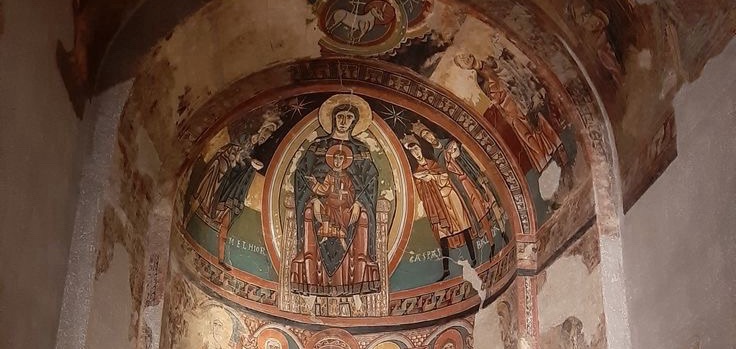
St. Mary’s Warning of Hell – Coptic Vision of The Theotokos

An Excerpt from the book ‘Saint Mary’s Modern Miracles’ published by ‘Pope Kyrillos VI’s Sons’ through St. Mena Monastery Press:

“It shall come to pass that before they call, I will answer; and while they are still speaking, I will hear” (Is 65:24).

Habib Farig developed a strong relationship with St. Mary and referred to her as the “Great Lady.” He would say of her that, as a mother, she knows the needs of us, her children, more than we do; he would also say that she knows what Christ has in His heart for us. He believed that having the Virgin’s presence in our lives gives us the hope to wait for the Lord’s miraculous and divine interventions. Through her intercessions, we see His Divine Power and blessings bestowed upon us.

Continue reading “St. Mary’s Warning of Hell – Coptic Vision of The Theotokos”

Repent and Believe in The Gospel!

The word Gospel comes from the Greek word evaggelion (εὐαγγέλιον) which means “Good news” or “Glad Tidings”. Within the ancient & pre-Christian Greco-Roman empire, it was common to see this word used when a king was praised for their accomplishments, military victory, or ascension to a throne. 

For example, the Roman senator Paullus Fabius Maximus issued an edict in honor of Caesar Augustus. He declared that his birthday should be considered as the beginning of the year on the provincial calendar since he brought peace to the Roman Empire. Because of this, his birth was considered to be the beginning of “εὐαγγέλιον”.

Continue reading “Repent and Believe in The Gospel!”