Prior to going back to Egypt to liberate the children of Israel from captivity, the Prophet Moses had an encounter with God on Mount Horeb. Seeing the glory of God being manifested through a burning bush, he fell to his face in fear of looking at God, as God had revealed to him: “I am the God of thy father, the God of Abraham, the God of Isacc, and the God of Jacob” (Exodus 3:6). God revealed to him that He was, out of His love and compassion, displeased of Israel’s bondage to captivity, and that He would deliver them and bring them to a land which is good, large, and flowing with milk and honey (Ex 3:7-9). After God had told Moses that He would send him before Pharaoh to deliver the nation of Israel, he had doubts pertaining to his capability; and also questioned how he should identify God when the Israelites were to ask of His Name. In response, the Lord told the Prophet: “I AM THAT I AM … thus you should tell the children of Israel; ‘I AM has sent me unto you’” (Ex 3:14).
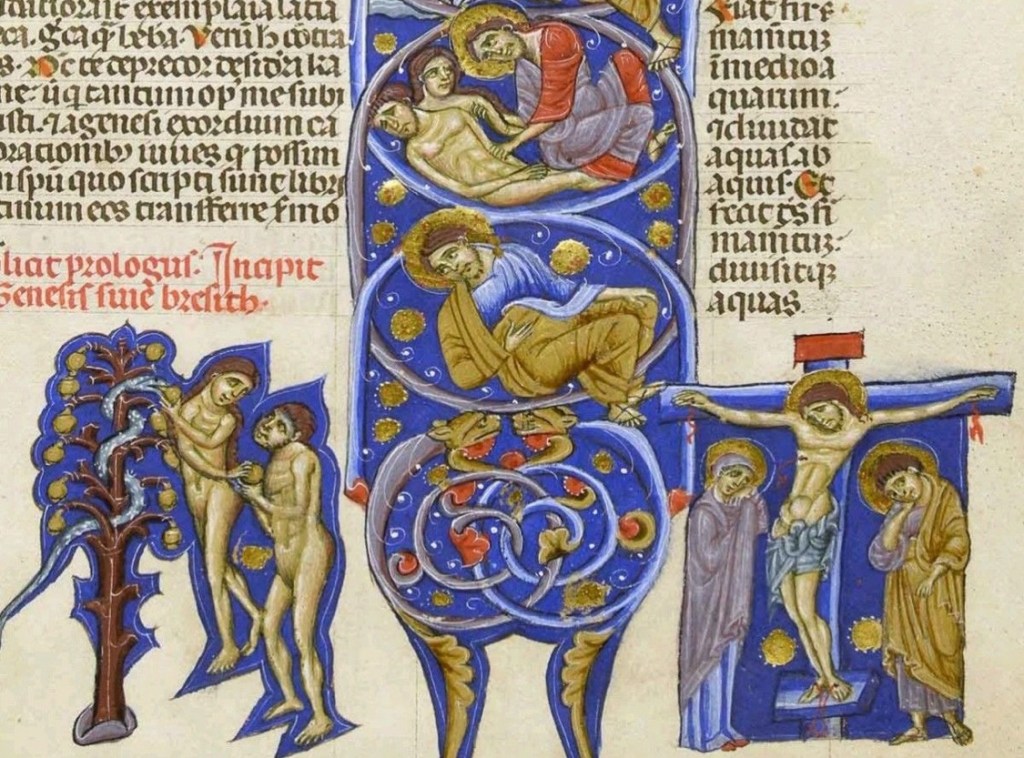
This Holy Name given by God, which was revealed to Moses by His Word, emphasizes that “God is the supreme existence, and is therefore unchangeable, the thing that He made He empowered to be, but not to be supremely like Himself” (Augustine of Hippo, The City of God, Book 12, chap. 2). Because of this sacred truth, St. Moses tells us that it was “In the beginning, God created the Heavens, and the Earth” (Genesis 1:1), as He is ever eternal, infinite, without beginning, without end, and the Creator of all things and the source of their very existence out of nothing – all by the Self-Same Word (Genesis 1:3-31). St. Augustine tells us that when God created all things, “He communicated a more ample, to others a more limited existence, and thus arranged the natures by ranks” (The City of God, Book 12, chap. 2). In other words, when God created all things, He established a hierarchy; with man being the highest of all the carnal creatures, “For man is more honorable than any created thing…” (John Chrysostom. Homily 56 on the Gospel of John).
Continue reading “The Incarnation: The Recapitulation of Adam in the Eternal Word”

 Faith Unto Ages