The Apostle Peter warned: “Be sober, be vigilant; because your adversary the devil walks about like a roaring lion, seeking whom he may devour” (1 Peter 5:8).
By what did the sacred writer mean to be sober and vigilant; save being alert and on guard against enticement that comes from so great a deceiver? An ancient enemy which only seeks the ruin and destruction of souls, as evident in his initial trickery with our first parents Adam and Eve? As divine inspiration tells us, the devil had deceived Eve into believing that she would not disobey God by breaking the first law given to man, and that she would obtain knowledge that would make her ‘god-like’ (Genesis 3:4-5), despite already having the virtue of being made in God’s image and likeness. Therefore, the race of mankind was gifted with immortality, incorruptability, and rationality which all of the other visible creatures lacked.
Yet, as we know, the consequence of sin and death came into the world as a result. Seeing that he was successful in this ancient trick, he likewise continues in his ancient attempt to destroy man by attacking the faith of Christians through a series of vain philosophies and sciences; a device which was successful in capturing the belief of those that we now call atheists, rationalists, modernists, naturalists, and the like.
Aware of this threat against truth, Paul prophesied:
“Now the Spirit expressly says that in latter times somewill depart from the faith, giving heed to deceiving spirits and doctrines of demons”
— 1 Timothy 4:1.
These sects of vanity are the product of what James called wisdom that “does not descend from above but is earthly, sensual, demonic” (James 3:15), as their proponents of error deny Christianity and the infallibility of Scripture; and thus also salvation, miracles, and the holy dogmas. These victims of the ancient serpent’s lies have been manipulated by the devil in believing that they have been enlightened through modern scientific discoveries and advancement; and as a result, question whether what was revealed in scripture has any credibility. Consequently, many poor souls have begun to question, even willfully, the existence of God.
Thus, they began to attribute creation to natural terrestrial processes as explained through their grave error of macro-evolution. To provide one example of many, let us consider the words of the American evolutionary biologist and commentator Richard Lewontin, who fallaciously stated:
We take the side of science in spite of the patent absurdity of some of its constructs, in spite of its failure to fulfill many of its extravagant promises of health and life, in spite of tolerance of the scientific community for unsubstantiated just-so stories, because we have a prior commitment, a commitment to materialism… Moreover, that materialism is absolute, for we cannot allow a Divine Foot in the door… To appeal to an omnipotent deity is to allow that at any moment the regularities of nature may be ruptured, that miracles may happen.
— Whorton, Mark S, and Hill Roberts. Holman Quicksource Guide to Understanding Creation. Nashville, Tennessee, Holman Reference, 2008. Pg. 423.
This is a fair demonstration of intransigence; as to clearly see the inconsistencies in one’s philosophy and admit to its flaws proves its instability to provide clarity on mysteries beyond human comprehension. So thus, as Christians, what better response is there for us to give but: ‘What willful blindness!’; ‘What idleness of rationale!’?
Of such, St. Basil said:
If the sun, subject to corruption, is so beautiful, so grand, so rapid in its movement, so invariable in its course; if its grandeur is in such perfect harmony with and due proportion to the universe: if, by the beauty of its nature, it shines like a brilliant eye in the middle of creation; if finally, one cannot tire of contemplating it, what will be the beauty of the Sun of Righteousness? If the blind man suffers from not seeing the material sun, what a deprivation is it for the sinner not to enjoy the true light!
— Hexameron, Homily VI.
As sin (Gk: ἁμαρτία) literally means ‘missing the mark’, what greater and more tragic way to miss sight of heavenly wisdom than by being void of the light of Christ which enlightens our souls and minds? As the Psalmist says: “For with you is the fountain of life; in Your light we shall see light” (Psalm 35:10). What other true light is there but Christ (Jn 8:12), who is ever so willing to use us as vessels of His light: not only for ourselves and our own enlightenment, but for others still within the shadow of darkness (Mt 5:14-16).
To return to the initial topic at hand regarding macroevolution, we must first define what it is from the vain perspective of its proponents. Macro-evolutionalists believe that life is to have arisen simply by chance; blasphemously excluding the idea of God creating all things out of nothing. By extension, they vainly adhere to the idea that prior to man’s current existence, that our race came into being through a progression. More elaborately, that humanity was formed as a result of a slow process through a series of species from amoeba to a variety of brutes. Thus, according to Darwin and those that share his view, life forms are not fixed entities. This reasoning of course robs God of the glory due to him for a variety of reasons which we will now discuss.
It is relevant to discuss who God is. When revealing Himself to Moses on Mount Horeb, He has declared, “I AM the Existing One” (Exodus 3:14). Thus, as the Existing One, He is without Beginning or End: “I am the Alpha and the Omega, the Beginning and the End, Who Is, and Who Was, and Who Is to come, the Almighty” (Revelations 1:8). Therefore, as being without beginning or end, this would imply that He is immeasurable and unlimited.
[Unfortunately, Pope Francis of the Roman Catholic Church did not agree with this. For he said: “When we read about Creation in Genesis, we run the risk of imagining God was a magician, with a magic wand able to do everything. But that is not so.” What blasphemy to not only compare the Creator to those that perform witch craft, as did some of the Jews (Luke 11:15), but to also limit God and say that He is incapable of doing what He wills? This should not be surprising as one of Francis’ allies, Cardinal Kasper, had suggested that “we need not take the so called ‘Nature Miracles’ as historical (‘Jesus the Christ, Page 90-91). This alone proves, amongst many other examples, the doctrinal decline of the Roman Catholic Church and their departure from the faith as taught within the scriptures & by the early church fathers as we will demonstrate].
Hence, it must mean that He is outside of time, which was created. It would not be without reason to cite St. Basil on this matter who will guide us through these mysteries, who said when commenting on Genesis 1:1 as follows:
Perhaps these words “In the beginning God created” signify the rapid and imperceptible moment of creation. The beginning, in effect, is indivisible and instantaneous. The beginning of the road is not yet the road, and that of the house is not yet the house; so the beginning of time is not yet time and not even the least particle of it … “In the beginning God created,” it is to teach us that at the will of God the world arose in less than an instant…
— Hexameron, Homily I.
As we know, mankind and other creatures are incapable of creating time. It has no material ancestor, nor form or physical substance; thus invisible. If God is able to create time, which comes from nothing, what prevents Him from creating all other things out of nothing as well? St. Irenaeus once said:
For, to attribute the substance of created things to the power and will of Him who is God of all, is worthy both of credit and acceptance. It is also agreeable [to reason], and there may be well said regarding such a belief, that the things which are impossible with men are possible with God. While men, indeed, cannot make anything out of nothing, but only out of matter already existing, yet God is in this point pre-eminently superior to men, that He Himself called into being the substance of His creation, when previously it had no existence.
— Against Heresies 2:10:4.
Would this not extend to all material matter, including this very earth and the creatures upon it? Are we to reason that He, therefore, needed a helper; save the Eternal Word Who is One in Essence with Him? The pagans of antiquity had the erroneous idea that the earth was without beginning or end, consequently deifying it. With this view, they attributed all creation to have come from it. Yet, to correct this mistake, Moses under Divine Intervention emphasized that even earth was created: “In the beginning God made heaven and earth” (Genesis 1:1).
For what reason, then, are we to credit the earth for our origin? And by what mouth did the earth possess, to command our existence from it, especially through a series of differing species contrary to their nature? When speaking on plants, St. Basil preached:
Numbers of other vegetables are the same and all over the earth reproduce by the roots. Nothing then is truer than that each plant produces its seeds or contains some seminal virtue; this is what is meant by “after its kind” (Genesis 1:2).
— Hexameron, Homily V.
If each plant is made after their kind, then what of the rest of living beings? The saint then says in a separate instance:
Nature, once put in motion by the Divine command, traverses creation with an equal step, through birth and death, and keeps up the succession of kinds through resemblance, to the last. Nature always makes a horse succeed to a horse, a lion to a lion, an eagle to an eagle, and preserving each animal by these uninterrupted successions she transmits it to the end of all things. Animals do not see their peculiarities destroyed or effaced by any length of time; their nature, as though it had been just constituted, followed the course of ages, for ever young.
— Hexameron, Homily IX.
And another:
With them the reproduction of each species is invariable, and natures are not mixed. There are none of those unions which, on the earth, produce mules and certain birds contrary to the nature of their species. With fish there is no variety which, like the ox and the sheep, is armed with a half-equipment of teeth, none which ruminates except, according to certain writers, the scar.
— Hexameron, Homily VII.
There is another issue that Macro-evolution has which is at complete odds with Christian dogma, namely, that God had specifically made man in His Image and likeness (Genesis 1:26-27). Thus, man was gifted with incorruptability, immortality, holiness, and rationality which of course contributes to free-will. Though humanity lost the grace of God’s likeness through the fall, man still possesses an immortal soul and rationality; something by which the other material creatures lack. This has been repeated throughout several of St. Basil’s homilies on the creation narrative. Speaking on animals, he said that they are only influenced by instinct (Hexameron, Homily V) as they are “without reason” (Hexameron, Homily IX).
Thus, it is logical why the devil would only tempt humanity who could determine the differences between right and wrong; virtue and vice, morality and immorality; which is evident in man’s possession of natural law (Romans 2:14-15). Thus Basil writes:
“There has been implanted in us natural reason which tells us to identify with good, and to avoid all that is harmful”.
— Hexameron, Homily VII.
Thus, if we were to look at our existence through the lens of the macro-evolutionalists, again, we would not be made in God’s image since we would, to borrow from their operation, proceed from irrational beings that preceded our existence; as their souls die with the earth. On this subject matter, St. Basil asserted when preaching:
Hear now about the soul of creatures devoid of reason. Since, according to scripture, “the life of every creature is in the blood” (Lev 17:11), as the blood when thickened changes into flesh, and flesh when corrupted decomposes into earth, so the soul of beasts is naturally an earthly substance… See the affinity of the soul with blood, of blood with flesh, of flesh with earth; and remounting in an inverse sense from the earth to the flesh, from the flesh to the blood, from the blood to the soul, you will find that the soul of beasts is earth.
— Hexameron, Homily VIII.
Such an evolutionary view would also force a disqualification of our very salvation; because if Man was not made in His image, then for what reason did the Eternal Word become Incarnate? St. Athansius writes:
For this cause, then, death having gained upon men, and corruption abiding upon them, the race of man was perishing; the rational man made in God’s image was disappearing, and the handiwork of God was in process of dissolution. For death, as I said above, gained from that time forth a legal hold over us, and it was impossible to evade the law, since it had been laid down by God because of the transgression, and the result was in truth at once monstrous and unseemly… He took pity on our race, and had mercy on our infirmity, and condescended to our corruption, and, unable to bear that death should have the mastery — lest the creature should perish, and His Father’s handiwork in men be spent for nought — He takes unto Himself a body, and that of no different sort from ours.
— On the Incarnation.
As we have discussed previously, proponents of macro-evolution believe that the greatest ancestor to the human race was amoeba followed by a variety of brutes. Yet, at what time did these creatures receive rationality to turn into man? And how is the macro-evolutionary view consistent with divine revelation; that man was made from the dust of the earth? For Genesis says that God had “formed man out of the dust from the ground, and breathed in his face the breath of life; and man became a living soul” (Genesis 2:7). At what point did amoeba and those that follow come into existence during God forming man out of the dust of the ground? Scripture is silent on it for a reason; because such an absurdity did not happen. Not to mention that the idea of amoeba being man’s greatest ancestor robs what is due to Adam.
It was for this reason, as discussed already, that God the Word became Incarnate to redeem our race which was in bondage to sin and death. Thus, St. Irenaeus speaks on the recapitulation of Adam in the Eternal Word with the following words:
For if the one [who sprang] from the earth had indeed formation and substance from both the hand and workmanship of God, but the other not from the hand and workmanship of God, then He who was made after the image and likeness of the former did not, in that case, preserve the analogy of man, and He must seem an inconsistent piece of work, not having wherewith He may show His wisdom. But this is to say, that He also appeared putatively as man when He was not man, and that He was made man while taking nothing from man. For if He did not receive the substance of flesh from a human being, He neither was made man nor the Son of man; and if He was not made what we were, He did no great thing in what he suffered and endured. But this is to say, that He also appeared putatively as man when He was not man, and that He was made man while taking nothing from man. For if He did not receive the substance of flesh from a human being, He neither was made man nor the Son of man; and if He was not made what we were, He did no great thing in what He suffered and endured.
— Against Heresies: Book III Chapter 22.
No where do we see within the saint’s words any mention of the Lord becoming a variety of other species. If we are to use the logic of the macro-evolutionists; it would mean that the Word would also need to process from amoeba and so forth to recapitulate mankind in Himself. But such a view is not only absurd; but blasphemous and heretical. This is because, as Divine Inspiration tells us, our Lord was born from a pure virgin without the seed of man.
A woman who was the image of purity due to her sinlessness, yet truly human in the proper sense. Thus the Apostle Matthew tells us in his gospel: “Now the birth of Jesus Christ was as follows: After His mother Mary was betrothed to Joseph, before they came together, she was found with child of the Holy Spirit” (Matthew 1:18). It is for this reason that, in the Ethiopian Orthodox Tradition, we call St. Mary:
That field wherein no seed was sown, and yet there went forth from you the Fruit of Life.
— Ephraim the Syrian. Widase Maryam: Praises of St. Mary. 3rd ed., Eritrean Orthodox Diocese of USA and Canada, Eritrean Orthodox Tewahdo Ministry (EROTM), July 2017. Pg. 34.
In summary, macroevolution is irreconcilable with the Bible because it attempts to attribute the creation of life to natural elements and processes which suggest that humanity’s greatest ancestor was that of irrational amoeba and a subsequent procession of brutes. But as we saw from Scripture, such a ridiculous theory would only suggest that humanity was not made in God’s image, as only the human race is with reason as explained by St. Basil. We also saw that such a view also distorts God’s plan to save humanity, and therefore, tragically devalues the Incarnation and a variety of other dogmas.
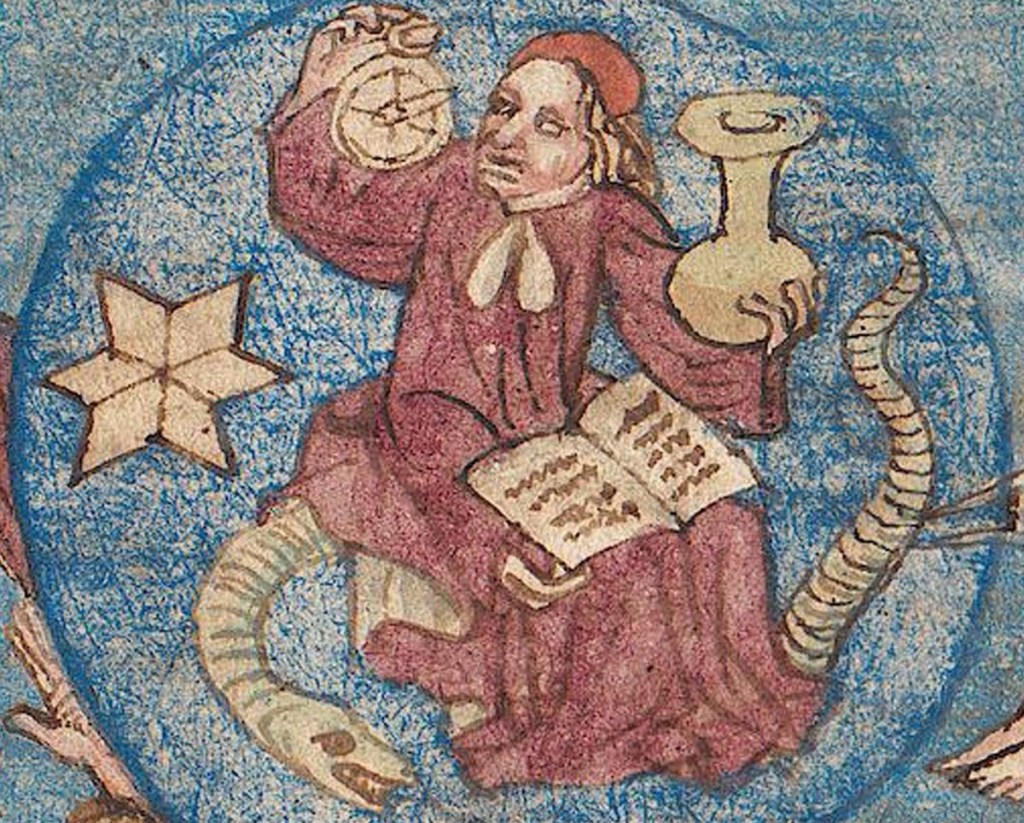
It is worth mentioning that there are also parallels between what is believed by macro-evolutionary proponents and ancient astrologists; as both attribute man’s existence to not only the earth; but animals. As St. Basil said on this matter regarding the idolatry of the astrologers:
This Ram, from whence you draw the nativity of man, is the twelfth part of the heaven… How can you see there the principal causes which influences the life of man? And why do you take animals to characterize the manners of men who enter this world? … If heaven has different characteristics derived from these animals, it is then itself subject to external influences since its causes depend on the brutes who graze in our fields.
— Hexameron, Homily VI.
But are we to agree with such ridiculous assertions? Nay, for the Apostle warns: “Little children, keep yourself from idols. Amen” (1 John 5:21). Yes, Amen indeed, as there is only one God, the Most Holy Trinity, who is worthy of being lauded for all creation and our very existence. In these times of great apostasy and error, may God preserve His Holy Church until the end of time in the sacred dogmas of the Orthodox faith, and may the Church’s children not be shaken by the vain sciences and enticements of the evil one. To God be glory, world without end, amen.
 Faith Unto Ages